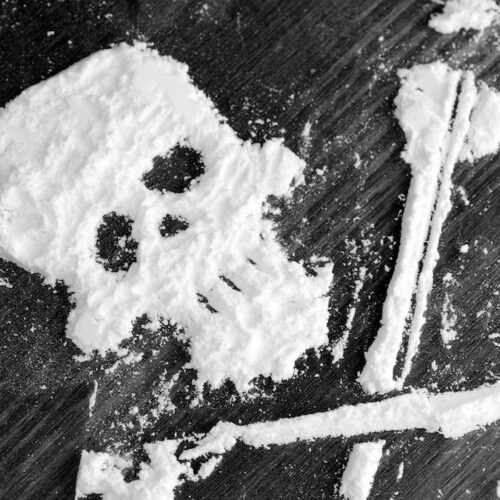

ANOTHER YEAR. Another set of drug death statistics. Another 1,133 human beings gone.
Drug deaths in Scotland rose by 11 per cent in 2025, from 1,017 to 1,133. But buried inside that dreadful number is something even more disturbing. Male deaths rose by 19 per cent, to 830, while female deaths actually fell. The highest death rates remain among people aged 35 to 54. In our poorest communities, the drug death rate is fifteen times that of our wealthiest.
These are not numbers from the distant past. This happened last year, after years of national missions, strategies, taskforces, consultations, working groups and promises that lessons were being learned.
At what point does Scotland admit that the system itself needs to change?
The Scottish Government is currently talking enthusiastically about public-sector reform. Ministers tell us that long-standing problems require radical thinking, that structures must change and services must become more effective.
Excellent. Start here.
Because in drugs policy we have created an extraordinary ecosystem around failure. Government funds organisations, organisations advise government, government consults the organisations it funds, and their advice frequently produces more of the same programmes, structures and organisations. Everyone attends another meeting. Everyone produces another strategy. The funerals continue.
And perhaps the most extraordinary feature of this national failure is how little failure appears to matter.
The same institutions remain influential. Many of the same organisations remain around the table. The same professional voices that helped shape the system are invited back to explain what should happen next. Money moves around, strategies are renamed and priorities are repackaged, but the architecture survives.
In almost any other walk of life, persistent failure on this scale would lead to serious questions about leadership, assumptions and accountability. In Scottish drugs policy it too often seems to lead to another grant, another committee and another consultation with substantially the same people.
That is not reform. It is institutional self-preservation.
I have worked in addiction and recovery for decades. I am also in recovery. Across Scotland there are thousands of people who know, from rather more than a textbook, that recovery is possible. We know what helped us: treatment, relationships, responsibility, community, purpose, belonging and hope. We have repeatedly asked government to build a system in which getting well is not an accidental outcome but an explicit ambition.
Too often those voices are welcomed when they are useful for a photograph or consultation exercise and ignored when they challenge the prevailing orthodoxy.
That is the part I find increasingly difficult to forgive year after year.
Nitazenes were implicated in more than three times as many deaths as the previous year, while deaths involving cocaine rose by 23 per cent to a record 589. The picture is complex
But complexity cannot become an alibi for institutional failure.
Scotland has spent enormous amounts of money attempting to manage this catastrophe. When by its very nature addiction is completely unmanagable. What it has repeatedly resisted is changing the incentives, structures and assumptions of the system itself. We measure contacts, prescriptions, engagements, interventions and processes. Meanwhile the outcome that matters most is staring back at us from the mortuary.
And now 830 dead men should trouble us profoundly. Something is happening to working-age men in Scotland, particularly in our poorest communities. Drugs are part of that story, alongside alcohol, suicide, homelessness, family breakdown, isolation and the disappearance of social structures that once gave people identity and purpose. We should at least have the courage to investigate it seriously.
The people and institutions responsible for building and defending the existing system cannot also be allowed a permanent veto over reforming it.
Bring in people who have recovered. Bring in families. Bring in organisations actually helping people rebuild lives. Examine what other countries and systems are doing differently. Measure recovery, not merely activity. Make detox and residential rehabilitation genuinely accessible. Build pathways that continue long after the immediate crisis has passed.
And introduce something Scottish drugs policy has been strangely resistant to: consequences for persistent failure.
Not scapegoating. Not witch-hunts. Accountability.
If a programme does not improve outcomes, change it. If an organisation cannot demonstrate results, ask why it continues to receive public money. If the same approach produces the same terrible results year after year, stop asking its architects to redesign it.
Above all, stop confusing protecting a system with protecting the people trapped inside it.
Scotland does not need another solemn promise to learn lessons. We have been learning lessons for years. Apparently nobody ever graduates.
We need the courage to change what is failing.
Because 1,133 funerals are not a policy challenge.
They are an indictment.
Established in 2006 and celebrating twenty years, ThinkScotland is not for profit relying on donations to publish our wide range of opinions. You can subscribe to our FREE newsletter here – share and follow us on ‘X’ here – like and comment on facebook here and make a donation here. Every contribution helps to meet our overheads.
Photo of cocaine by joebakal via Adobe Stock