
Divine Right of Kings versus Magna Carta and the common law
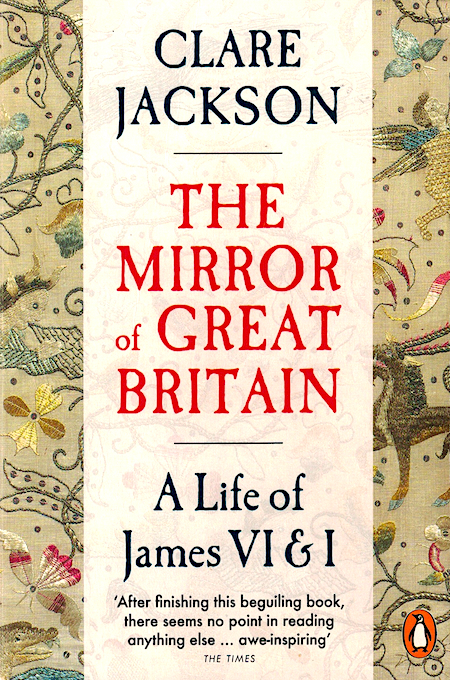
THE ORIGINAL UNIONIST was a Scot, the most intelligent and educated monarch who ever sat on the British throne, James VI & I. On the twentieth anniversary of the foundation of ThinkScotland it is appropriate to revisit James’s approach to Unionism. The author of the book under review, Clare Jackson, ends her discussion of his life by saying: “James VI and I was indeed the first king of Great Britain; he was also, by far, its most interesting.” (p. 402)
The book I am referring to is The Mirror of Great Britain: a Life of James VI & I by the Honorary Professor of Early Modern History at Cambridge and winner of the 2026 Elizabeth Longford Prize for Historical Biography for this book. Professor Jackson has not written a conventional chronology of her subject’s life but rather a thematic study.

She paints a fascinating and detailed picture of Jacobean Scotland and England though, for my money, there could have had a little more on the constitutional implications of the other big thing which James is known for — the theory of the divine right of kings. The main interest today in James’s life is the oil-and-water relationship divine right had with Magna Carta, the common law and the vigorous parliamentarianism of early seventeenth century England. In other words, how did top-down government co-exist with bottom-up politics and law?
Jackson quotes James’s definition of divine right as given in parliament in 1610: “The state of monarchy is the supremist thing on earth: for kings are not only God’s lieutenants upon earth, and sit upon Gods’ throne, but even by God himself, they are called Gods.” (p. 401) Becoming a “God” is about as top-down as you can get. Like his near contemporary, Ivan the Terrible, James thought of himself as responsible to no-one but God and his own conscience. That, of course, is a recipe for tyranny, and I have written a long book about the collision between status (Russia) and contract (rule of law countries).
My argument is that autocracy can work tolerably well only when the sovereign is a good and wise person who has some reserves of tolerance that allow subject humanity to be human rather than robotic. Russia is the perfect historical laboratory for autocracy as the practice there has been more uncompromising than in almost any other major European country, even France. Had I time, I would love to write about Scotland’s historic relationship with the rule of law. Certainly, in the sixteenth century it ran Russia pretty close for anarchic savagery amongst the upper classes. Only the scale was different.
Status derives its authority from historical victories. God’s favour is indicated by success in battle. That is why President Putin uses the memory of the Second World War to overawe Ukraine and intimidate Europe. The same applies to every Scot who thinks that the battle of Bannockburn matters today. English football-level status feasors exhibit a similar conceit about “Wembley 1966”.
Kings are also status feasors, only on a different social and constitutional level from the rest of us. Ancient pedigree is crucial to their assumption of superiority over their subjects. While the Scottish Crown traced its ancestry back to Fergus Mór mac Eirc, a sixth century Irish king of Dalriada (and James went further to a mythical king Fergus mac Ferchard who lived about 300 BC), Ivan claimed descent, through his grandmother, Sophia Paleologue, from Augustus Caesar’s brother. That is real status!
As I say, tyranny is the obvious danger in any system of divine right, irrespective of whether the divinity concerned is the Christian God, Allah, Jahweh, Gautama Buddha or, for the Zulus, Unkulunkulu. Like Ivan, James tended to conflate opposition with treason. (The same problem affects Putin today, as it does unpedigreed status pretenders in Scotland like Nicola Sturgeon and John Swinney.) Jackson says that James, in one of his books published in 1598, five years before he went south to rule England, wrote that tyranny should not be opposed but must be “endured without resistance but by sobs and tears to God.” (p. 54)
Whereas Ivan had no close counsellors telling him not to be so selfish and stupid, James did. His tutor, George Buchanan, a highly educated but stern teacher, argued at length in print about not only the right of rebellion against tyranny but the duty to rebel. Buchanan argued that political authority ultimately derived from “the people” and that a tyrannical ruler could legitimately be resisted. How those people expressed their view in sixteenth century Scotland, he did not say.
Buchanan was an angry product of the Protestant revolution. But James responded to the way the stability of the kingdom was undermined by intolerant factionalism, as well as by clannish feuding and general bellicosity on the part of overmighty nobles and their armed retainers. Mostly, they were hardly “resisting tyranny”. Rather they were killing and stealing on their own account. Though he tried to avoid external war, James believed that the only way for a ruler to deal with assertive status and survive was to meet it with superior force, or status.
If divine right was the only idea that could overcome almost endless oligarchic destructiveness, then it had some justification. In Prof. Jackson’s telling, James comes across as a man who was intelligent enough to understand that certain ideas should not be pressed too hard, however right they may seem to be to the brain that holds them. It was his son, King Charles I, who took it all so seriously that he provoked a civil war in which he ended up being tried, convicted, beheaded and publicly vilified. Putin seems to exist in a similar state of querulous self-righteousness.
When James got to London, in 1603, and was crowned king of England too, he met more weighty opposition than gangs of Scottish aristocratic hooligans. The most weighty of them was Sir Edward Coke, arguably the most important lawyer of the seventeenth century. Coke was sixteen years older than James, and had already been Attorney-General and Speaker of the House of Commons, when the latter went to London. In 1603 he led the prosecution of Sir Walter Raleigh and, in 1605, prosecuted the perpetrators of the Gunpowder Plot. He could adopt a bullying manner in court (status) but “at Court” he was a stout defender of the rights of common Englishmen as first articulated in Magna Carta (contract).
The idea which that document introduced to English law was one of the most fundamental arguments against divine right, namely the then novel idea that the king was subject to the law, just as much as any subject of his. That outraged James, but by then he had already appointed Coke Chief Justice of Common Pleas, one of the two highest courts in England. In 1613, he made him Chief Justice of the King’s Bench, the other great judicial office within the court system. It says a lot for James’s canniness that he did not follow Ivan and have his learned friend murdered with revolting cruelty after he committed the sin of disagreeing with him.
Though his son, Charles, dismissed any judge who argued with him (I discuss this in the book in connection with the so-called Five Knights case, 1627), James hung on until it was clear that he could not work with his intractable Chief Justice anymore. He finally dismissed him only in 1616.
Coke had first raised the issue of the supremacy of law over the monarch in 1607 in the so-called Case of Prohibitions. He told the King—which was a courageous thing to do in the context of the time—that he was not permitted to sit in court as a judge at any time he chose. In 1610, the two crossed swords again with reference to the Case of Proclamations. Coke argued that James could not legislate on his own initiative without parliament. Not only could Ivan do that, but all tsars, general secretaries and presidents in Russia since have been able to do that, right up to the present day. In part, that is what the war in Ukraine is all about—the unrestricted power of assertive status in a country which had no equivalent of Sir Edward Coke.
Coke’s dismissal in 1616 revealed the limits of protest in a country—like England then and Russia today—in which the judges are appointed and can be dismissed by the status holder. The long-running battle for the independence of the judiciary was finally resolved only in 1701 by the Act of Settlement. That gave judges tenure for life, subject to good behaviour on the Bench. That, in turn, meant that the Crown—still the executive agency of the country—could not fire them as it could almost any other servant in its pay, however senior. Since then, Britain has had the rule of law to some extent—at least that is the date which seems to me most appropriate to mark the change from the rule of the monarch to the rule of law.
It is to James’s credit that he never pushed his views so hard that such early shoots of contract, like Coke’s theories on the practical meaning of Magna Carta, were killed before they had time to blossom. But James was a Unionist, and therefore had a certain understanding that different people in different countries could hold importantly different views on constitutional questions like the respective roles of kings and senior judges. It is only small-pond separationists and the greedy goose-brains of acquisitive municipal socialism who push their own views so hard as to turn government into a social nuisance.
Established in 2006 and celebrating twenty years, ThinkScotland is not for profit relying on donations to publish our wide range of opinions. You can subscribe to our FREE newsletter here – share and follow us on ‘X’ here – like and comment on facebook here and make a donation here. Every contribution helps to meet our overheads.
Images kindly provided by the author