
Coming down from the family tree
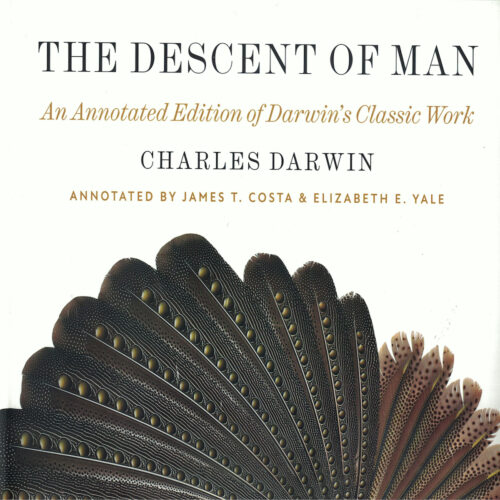
LET ME SAY right away that this book illustrates what real publishing is for. I can hardly remember a more beautiful literary artefact. It has nearly forty colour plates, innumerable drawings by Darwin himself and, on each page, parallel texts with Darwin’s words and explanatory notes accompanying them. Both the notes and the introduction were written by two experts, James Costa, a professor of evolutionary biology, and Elizabeth Yale, a professor of the history of science.
The book is presented in “landscape” format, with Darwin’s text as originally published on one side of each page and the explanatory notes beside it. The notes are numbered so that it is impossible even for a non-scientist like me to get lost. There are some things—many things, actually—which only a book can do. This one does them all. It makes a painful contrast with modern audio-visual presentations which are so often shallow because they are deliberately written for people suffering from a truncated, post-smartphone attention span.
The full title of Darwin’s book was The Descent of Man, and Selection in Relation to Sex (1871). This book is entitled The Descent of Man: an Annotated Edition of Darwin’s Classic Work. This book uses the 1882 edition which incorporates some of Darwin’s second thoughts, a few additions and a long list of corrections which is included right at the start. It is, you could say, the definitive volume of his work, given permanent form by this beautiful new edition. I could not recommend it too highly.
I wrote recently here about a new biography of Darwin. That was an interesting book too, but it was about a completely different subject, namely Charles Darwin, whereas this book is about the pre-history of mankind, in the context of the history of many other species. Part I is called The Descent or Origin of Man, Part II Sexual Selection and part III Sexual Selection in Relation to Man.
In the Introduction, Darwin says:
“The sole object of this work is to consider, firstly, whether man, like every other species, is descended from some pre-existing form; secondly, the manner of his development; and, thirdly, the value of the differences between the so-called races of man… This work contains hardly any original facts in regard to man; but as the conclusions at which I arrived, after drawing up a rough draft, appeared to me so interesting, I thought they might interest others.” (p. 2/18—2 in Darwin’s text and 18 in this volume)
As is clear even from that short quote, Darwin was a modest man who nonetheless thought on a global, if not cosmic, scale. His overarching points are two: mankind has evolved and mate selection was the main driver of that evolution. I leave the biology to the experts; I will concentrate on the modern implications of Darwin’s logic.
Darwin says that primitive man ruled by force, treating his family-tribal group as his subjects. Crimes within the group were dealt with very harshly but the opposite was the case when the same actions were carried out against members of different groups. “A North-American Indian is well pleased with himself, and is honoured by others, when he scalps a man of another tribe; and a Dyak [Borneo aboriginal] cuts off the head of an unoffending person, and dries it as a trophy… In a rude state of civilisation the robbery of strangers is generally considered as honourable.” (p. 117/133)
That was the pre-historic origin of status as a method of rule. It depended entirely on the disciplinary and defensive strength of the paterfamilias. That is a group survival strategy which was mirrored quite recently when one modern nation of our close acquaintance reverted to “a rude state of civilisation” and started robbing and “scalping” its neighbours to prove its status as being “über alles in der Welt”. Something similar is happening today in Ukraine.
More generally, one aspect of the status view of humanity is slavery. To have power of life or death over your fellow creatures is the greatest distinction of status possible. Darwin continues: “Slavery, although in some ways beneficial during ancient times, is a great crime; yet it was not so regarded until quite recently, even by the most civilised nations. And this was especially the case because the slaves belonged in general to a race different from that of their masters.” (Ibid., emphasis added)
On 15 October this year, a group of primitive moral chauvinists met at Chatham House in London to discuss slavery on the basis that modern morality should have governed past morality. “The past is our empire,” they might as well have been saying because this really is a non-territorial form of imperialism.
Baroness Amos, a President of Chatham House and a former UN Under-Secretary-General for Humanitarian Affairs, led a discussion entitled “Is now the time for reparative justice on the global stage?” The background assumption seems to have been that slavery was a sin in all times past and that people living today, who have no culpable involvement in it, should for some reason be forced to pay “reparations” to those who did not themselves suffer from it but some of whose ancestors might have done.
In my review of Janet Browne’s biography of Darwin, as mentioned above, I made the point that it is a gross injustice to historical memory to judge Darwin and his contemporaries by the standards of twenty-first century middle-class culture in Britain, America, etc. (You will not find many who agree with the Chatham House pontificators in Russia and, I suspect, even fewer in China, North Korea or Iran.) That injustice springs from a blind egocentricity which is different only in degree, not kind, from that which imposed slavery in the first place.
In this book, Darwin’s discussion of primitive cultures may be unsophisticated in some ways but he was an “advanced” man for his time. Take, for example, his spat with Captain Fitzroy of HMS Beagle on the subject of slavery. Fitzroy seems to have been ambivalent about the institution, and the two men fell out for a while as Darwin was unequivocally against it. So it is not out of some grotesque prejudice that Darwin explains why wives were routinely enslaved by their “husbands” in the past.
“As barbarians do not regard the opinion of their women, wives are commonly treated like slaves. Most savages are utterly indifferent to the sufferings of strangers, or even delight in witnessing them. It is well known that the woman and children of North-America Indians aided in torturing their enemies. Some savages take a horrid pleasure in cruelty to animals, and humanity is an unknown virtue.” (Ibid.)
Darwin concludes his discussion of the moral sense by saying; “It was assumed formerly…that the foundations of morality lay in a form of Selfishness; but more recently the ‘greatest happiness principle’ has been brought prominently forward [by J.S. Mill]… [But] when a man risks his life to save that of a fellow creature, it seems more correct to say that he acts for the general good, rather than for the general happiness of mankind. (pp. 120/136, 121/137, emphasis added)
Imperialism has no respect for the “general good” principle, much less “general happiness”. The same applies to the intellectual imperialism of the Chatham House variety. The reason is simple. There can be no justice, much less logic, in saying that the general good applies to one group of people but not to others—in this case, to those whose ancestors were mistreated and not to those whose ancestors did the mistreating. Since we are judging people not propositions, individual guilt is necessary for conviction. Where is the justice in punishing people for actions they did not commit? How might we explain this primitive negation of the principle of “equal justice under law”?
What I suspect is really going on is that the establishment figures of Chatham House think that their salaries, pensions and other perks and positions depend on their pretending to think that justice lies in robbing European Peter to pay ex-African Paul. The only way the Chathamites can keep their bums in the bureaucratic butter is by attacking the morality of “white van man” on behalf of “Jamaican man”. Given the two groups’ relative positions in the power structure of modern Britain, that amounts to unprincipled bullying.
Worse still, this retributive greed will not even do any real good. We know from experience of NGOs and the other fellow travellers of bureaucratic government that any money taken by taxation from the ordinary people of Britain will not go to Jamaica or wherever. Most of it will be trousered by the promoters who organise the whole thing, both here and in Jamaica. How much of Bob Geldoff’s Band Aid money actually reached staving Ethiopians? Hardly any—or rather, according to the BBC, possibly as little as 5%. That is the bureaucratic way, to hijack compassion and steal the cash for handover to its clients in the “third sector” vulture community.
The same will apply to “reparations”. That is not justice, it is simple establishment theft conducted against people lower down the corrupt administrative hierarchy than themselves. It stinks almost as much as slavery once did. If it ever came to pass—which I doubt—it could end up as a modern version of the Versailles Treaty of 1919. The indirect consequences of that travesty of justice, which was caused mainly by French status anxiety (as Keynes pointed out at the time), was another war which killed twice as many Jews in six years as the infamous Middle Passage did African slaves in three centuries.
One of the reasons why it is rewarding, especially for a non-biologist, to read Darwin in the original today is because the breadth, depth and generosity of his thinking is such a blessed relief from hypocritical nastiness of the pharisees in places like Chatham House. The limpid clarity of the great man’s writing puts the moral fog of woke phariseeism in its proper place (which is the bin). For anyone who, like me, has never read Darwin before in his own words, this book would be the best place to start. It is one of the most elegant and interesting artefacts I have ever held.
Images kindly provided by the reviewer.