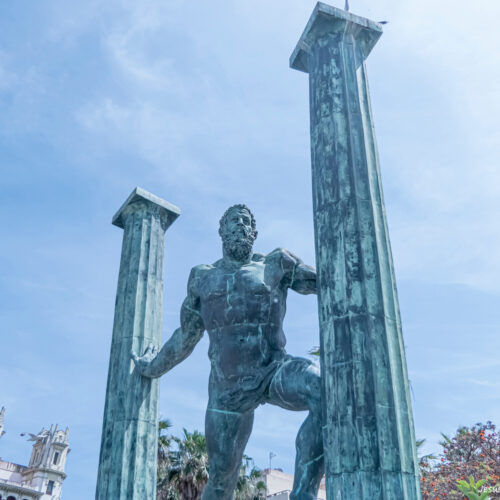

Payback at the Pillars of Hercules? Madrid has spent years undermining Western interests while expecting unquestioned Western solidarity. Ceuta and Melilla offer the perfect point of pressure.
PEDRO SÁNCHEZ wants the privileges of alliance without the duties of one. Madrid remains inside NATO, hosts critical American military infrastructure, and speaks the language of Atlantic solidarity – but only when convenient. On the central strategic questions of the age—Russia, Israel, and the wider Western posture in the Mediterranean—it increasingly behaves like a spoiler. What is troubling is Spain is not merely posturing; it is rewriting its entire conception of statecraft, treating alliance as a shield, hostility as leverage, and strategic ambiguity as a governing doctrine.
When Washington needed alignment, the Spanish Prime Minister Pedro Sánchez offered obstruction. When Israel faced existential war, Madrid offered moral lectures. When the West sought energy discipline against Moscow, Spain found room for Russian gas. All while preserving the old imperial obsession with Gibraltar and extracting advantages from London over the Rock.
Spain has discovered the pleasures of consequence-free hostility. That needs to end.
Anti-Americanism with diplomatic immunity
Sánchez has carefully cultivated the old European left’s anti-American reflexes: NATO when subsidised, moral neutrality when sacrifice is required. His government publicly resisted support for American military operations linked to Iran escalation and signaled clear reluctance to facilitate use of Spanish bases such as Rota and Morón for operations that might implicate Madrid politically. The message was unmistakable: American security guarantees are welcome but strategic cooperation is negotiable. The rhetoric matched the policy. “No to war” was not merely a slogan for domestic consumption. Sànchez is deliberately positioning Spain as the righteous dissenter against Washington’s harder strategic line.
At the same time, Spain maintained substantial imports of Russian gas well into the European sanctions era. While pipeline politics consumed Brussels, Madrid benefited from a convenient moral distinction: condemning Moscow loudly while continuing commercial accommodation where useful. The formal sanctions architecture left open some loopholes, and Spain was happy to live inside them.
An ally that profits from ambiguity while others bear the strategic burden is not an ally in the full sense. As US War Secretary Pete Hegseth noted “An alliance cannot be ironclad if in reality or perception it is seen as one-sided.”
From criticism of Israel to open diplomatic hostility
On Israel, Sánchez has moved beyond criticism into active diplomatic confrontation. Recognition of Palestine was presented as humanitarian principle. In practice, it rewarded maximalism at the worst possible moment. Madrid helped transform October 7 from a terrorist massacre demanding strategic clarity into another European seminar on Israeli restraint. Spain became one of the loudest governmental amplifiers of the anti-Zionist campaign in Western Europe. Ministers normalised rhetoric that blurred the distinction between criticism of Israeli policy and systematic delegitimisation of the Jewish state itself. Arms restrictions then followed. Then diplomatic actions. Symbolism became policy.
Gibraltar: Madrid’s imperial nostalgia
Spain’s sanctimony would be easier to tolerate if it were not paired with its own colonial fixation. For decades, Madrid has pursued sovereignty claims over Gibraltar with theological persistence. Brexit offered a fresh opening. With Brussels behind it, Spain extracted a remarkably favorable negotiating posture over the future relationship of the Rock with both the European Union and the United Kingdom. London, in the hands of the most Europhile government in recent history, conceded far more than many British voters imagined when they heard the word “sovereignty.” Spain never abandoned the long game. It simply learned to play it through institutions until a weaker opponent appeared. Madrid insists Gibraltar is unfinished history. Fair enough, is it not time then to conclude the same about Ceuta and Melilla?
Ceuta and Melilla: reciprocity as foreign policy
The Spanish enclaves on the North African coast remain among the strangest survivals of Europe’s imperial map. Madrid treats them as untouchable national territory, however Morocco does not.
Rabat is acutely sensitive to external recognition of its sovereign claims. Washington understood this when US recognition of Moroccan sovereignty over Western Sahara helped unlock normalisation with Israel. Morocco chose strategic realism. Rabat joined the Abraham Accords, normalised relations with Israel, and understood that stability in the Mediterranean depends on serious alliances, not ideological theatre. the lesson is that strategic recognition produced strategic returns.
There is no reason the same principle should stop there. It grasped what Madrid seems determined to forget: the West rewards partners who contribute to order, not governments that posture from the sidelines. While Spain chased applause in campus encampments and anti-Israel grandstanding, Morocco invested in security, trade, and geopolitical credibility. If Washington and London want reliable partners on Europe’s southern flank, Rabat looks increasingly like the adult in the room.
If Spain insists on weaponising diplomacy against Washington and Jerusalem while leveraging European institutions against British interests in Gibraltar, then the United States and the United Kingdom should reconsider their own posture on Ceuta and Melilla. Nobody is suggesting military adventurism. Recognition politics is enough. Strategic ambiguity is enough. Diplomatic sympathy is enough. States learn quickly when abstraction becomes personal.
Why Morocco matters
Morocco is not merely useful because it annoys Madrid. It matters on its own merits. It is broadly aligned with Western interests in a region where that cannot be taken for granted. Algeria increasingly serves as a Russian access point. Tunisia has become fertile ground for Turkish and Russian influence. Instability across the Sahel continues to spread north. By contrast, Morocco offers continuity, trade, intelligence cooperation, and a long-term commercial relationship with Britain, including agricultural supply chains that matter to the British market. It is not perfect. No ally is. But it understands alignment. Spain increasingly performs alignment while practicing obstruction. Washington should know the difference.
Time for consequences
Foreign policy without consequences is merely etiquette. Madrid has spent years assuming it could undermine American strategic interests, indulge anti-Israeli grandstanding, pressure Britain over Gibraltar, and still be treated as an indispensable Western partner whose sensitivities must always be respected. That assumption should be retired. Ceuta and Melilla offer the perfect leverage. Spain has spent decades reminding the world that old sovereignty disputes never die. It may be time for Madrid to remember that lesson for itself.
Established in 2006 and celebrating twenty years, ThinkScotland is not for profit relying on donations to publish our wide range of opinions. You can subscribe to our FREE newsletter here – share and follow us on ‘X’ here – like and comment on facebook here and make a donation here. Every contribution helps to meet our overheads.