
Nevil Shute’s experience of Air Ministry incompetence in the crucial 1930s, focussing on the R 101 disaster
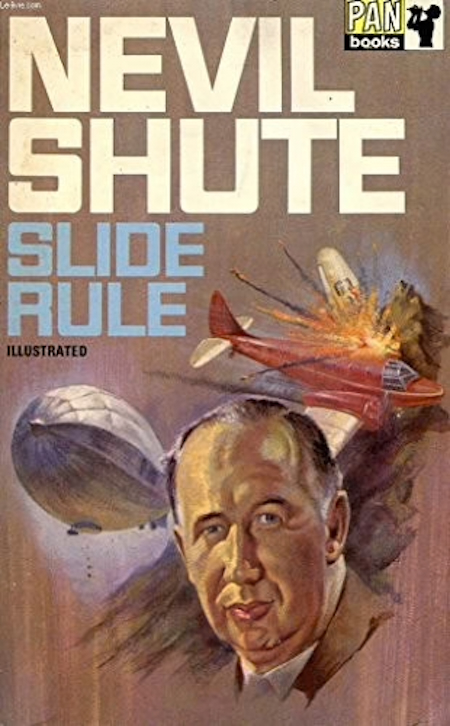
MANY OF THOSE who enjoyed either reading or seeing On the Beach or A Town Like Alice will be surprised to learn that the author, Nevil Shute, was also a skilled aeronautical engineer who was deeply involved for a decade in getting Britain ready for the Nazi attack which finally came in 1939. They will perhaps also be surprised by the role he played before then in the development of Britain’s first airship. The lessons from both experiences, which consumed Shute’s working experience from graduation in 1922 to the demise of the Luftwaffe in 1945, are contained in this short autobiography which he wrote in 1954. By then he had emigrated to Australia, where he produced most of his successful novels. He died of a stroke in Melbourne in 1960.
Shute’s autobiography is called Slide Rule, and has been republished in handy, budget edition by Vintage Classics, an imprint of Random House. Now, as Britain sinks under the paralysing weight of incompetent bureaucracy, Shute’s basic message is timely, indeed urgent. Essentially, it is this: no bureaucracy ever works as well as a serious private enterprise, because the latter always has a bottom line. The reason is simple: authoritarian bureaucracies have their own agenda and the politicians who control them (supposedly) also have theirs. They do not always coincide, which is an additional problem. But the main thing is that bureaucracy infantilises its subjects.
Shute experienced this in 1918-19 when he was conscripted into the army straight out of school. It was only after he had been discharged that he went up to Cambridge to study engineering. As a private soldier in barracks at Woolwich, he failed several times to qualify for officer training. He did not mind at all:
“I know of no life so restful as the life of a private soldier. In those days it was assumed he was quite incapable of any rational thought or responsibility; his corporal shepherded him about and told him where to go and what to do. He never had to think for himself about anything at all. If he didn’t turn up for parade it was a valid defence to say he didn’t know he had to, and the corporal got blamed for not looking after him properly… I know of no mode of life that permits such mental leisure, such time for reflection, except perhaps the monastery or prison.” (p. 30)
The heart of Shute’s story is the years he spent working as a designer, under the legendary Barnes Wallis (he of the “bouncing bomb”, and Tallboy) for a subsidiary of Vickers at Howden in Yorkshire in the later 1920s and early 1930s. The contract in hand was to build an airship. The British government thought they would make the ideal form of transport to replace steamships as a way of communicating with far-flung posts of Empire. The Air Ministry decided that it would build two test “ships”, the R 100 and the R 101 (“R” stood for “rigid”, as opposed to pure balloons which have no internal structure). They were the spacecraft of their time.
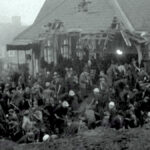
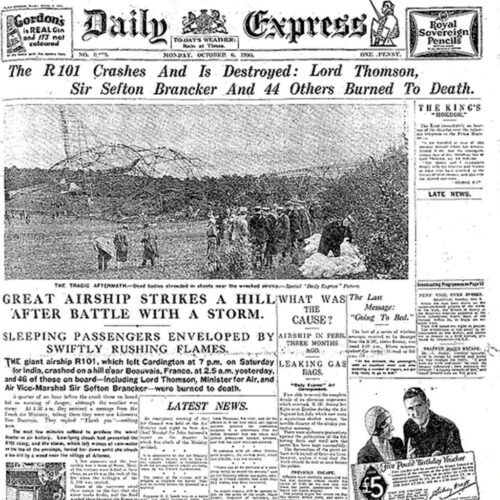
Everyone has heard of the R 101, built at Cardington in Bedfordshire, which famously crashed in flames on 5 October 1930 when carrying the Air Minister himself, Lord Thomson of Cardington, and 47 other passengers and crew (only 6 survived). The “ship” went down in a ball of flames near Beauvais in northern France while on its inaugural trip to India.
Nobody has heard of the R 100, built in north Yorkshire, which is what Shute worked on. It was designed to the same general project specifications as the R 101 but by a large and competent private firm which realised the consequences of failure were likely to be loss of company as well as a loss of life. Their ship went on its inaugural trip to Canada entirely without incident, which is why nobody has heard of it. The problem with the R 101 was the bureaucracy which was in charge of its design.
After its own ship failed so spectacularly, the Air Ministry cancelled the whole programme. Britain’s airship efforts ended at Beauvais. However, Shute comments that maybe this was a blessing in disguise as, from then on, all the research effort went into fixed wing planes, without which Britain might not have been so well prepared in 1939.
But why such a different outcome in the two cases? Shute writes:
“The airship programme constitutes one of the few occasions when a government department has been placed in direct competition with private enterprise. The reason [for the failure of the R 101] were fundamental to the incursion of a government department into industry and are the same today, whether the product be airships or guided missiles.” (p. 130)
Shute then described how the airship programme evolved, led by Lord Thomson himself.
“Christopher Birdwood Thomson was a professional solider… He was a gracious and cultured man who entered the army as a sapper in 1894 and made fairly rapid progress, becoming a member of the Supreme War Council in 1918. By 1920 he had developed strong Labour interests and had attained the rank of Brigadier-General; he then resigned from the army in protest against Allied intervention in Russia.” (p.131)
In early 1924, Ramsay MacDonald formed the first Labour government. He appointed Thomson as Air Minister with a seat in the Cabinet. As he did not have a seat in the House of Commons, he was made Lord Thomson. He then initiated the programme to design two competing airships, one built by Vickers and one by the Air Ministry itself, to the same specification. The government soon fell and was replaced by Stanley Baldwin’s Conservatives, who continued the programme. When Labour come back into office in 1929 (interestingly, five months before the Great Crash), Thomson became Air Minister again. Then, as Shute noted,
“the first Baron Thomson of Cardington was therefore responsible for giving the job of building the R 101 to the men at Cardington in the first place, and for the conduct of the Air Ministry throughout the period covering the flight trials of both airships.” (p. 131)

Shute stresses this, as it was during the trials that the defects of the Air Ministry product should have been spotted. Indeed they were spotted, but some were half-fixed while many others were given only cursory attention due to time constraints. This had nothing to with incompetence on the part of the Air Ministry engineers, for whom Shute had the highest respect, but due to the political priority which required that the ship ready for Lord Thomson’s planned visit to India. He wanted to arrive in a blaze of publicity in a brand-new machine, thereby reinforcing the awe and reverence for Empire which continued colonial status assertion demanded. As a rule, socialists are more snobbish and status-conscious than conservatives, who are often business people themselves.
By contrast, the men who worked on a contract basis refused to be hurried. They completed all the safety checks in proper order and at proper length and received all its proper airworthiness certificates. Their machine flew without incident to Montreal and back in July 1930, three months before the government machine crashed and burned. Yet the government airship was still not ready, as events were to demonstrate so tragically. Shute says of the Air Ministry programme:
“Practically every principle of safety in the air was abandoned, perhaps unconsciously. The first principle of safety in the design of aircraft is that there should be a second check on the design, conducted by an entirely independent body of experts. This principle was applied in the case of the R 100…. No such second check was ever imposed on the design of the R 101, except in the case of the strength of the main structure and the aerodynamic design.” (p. 133)
Two university professors with wide experience did some checking, with the result that “the aerodynamics of the R 101 were all right, and so was her structural strength… Questions of fire hazard, outer cover defects, gasbag and gas valve leakage, servo motors, structural overweight, astern power, and engine defects were never referred to those two professors.”(p. 134)
Lord Thomson then decided he would fly to India in the new ship, before it had been properly tested and the faults already identified in the air had been rectified.
“The reasons behind this extraordinary conduct of the Secretary of State for Air have never been divulged publicly; he was certainly not in the habit of going for test flights in experimental aircraft… He was a Labour politician and clearly believed heart and soul in the efficiency of State enterprise, to a degree that blinded him to all the technical evidence of the shortcomings of the R 101.” (p. 137)
Bureaucratic egotism oozes out of a minute Lord Thomson wrote in July 1930: “I must insist on the programme for the Indian flight being adhered to, as I have made my plans accordingly.” (p. 139) The ship departed without a proper airworthiness certificate. The two professors were still writing their report when they heard news of the disaster. “A scrap of paper should not be allowed to hold up the Indian flight.” So one concocted in the Air Ministry to allow the ship to cross borders legally was handed to the Captain at the last minute.
On the day of departure, the weather conditions were poor, and got worse sooner than forecast. By two a.m. she was flying at a thousand feet, heading east from Paris.
“At about ten minutes past two the ship got into a long and rather steep dive, which was sufficiently steep to throw the engineers attending to the engines off their balance. She was brought out of this dive onto an even keel for a few moments, but then dived again and hit the ground, not very hard. Immediately she burst into flame and was totally consumed in a few seconds. The cause of the fire was probably due to the ignition of a mixture of air and of the gas escaping from the damaged gasbags by a spark from a broken electrical circuit…. All the officers of the ship, and all the officials, and all the passengers perished in the fire, including Lord Thomson.” (p. 144)
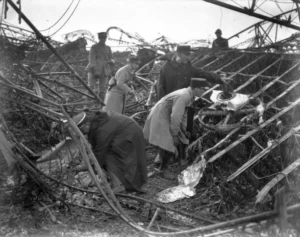
Most of the passengers were burnt alive in their bunks. All because a bureaucrat in politics (i.e. a socialist) thought timetables more important than proper contract supervision of fallible engineering staff. The Scottish government’s disaster with its two Port Glasgow ferries had, mutatis mutandis, the same cause, fortunately without such tragic results—to date. Electric vehicles are carried on CalMac ferries and they have been known to self-combust without warning. You do not need to be an engineering genius to realise that, on a crowded car deck with, perhaps with the island fuel lorry on board at the same time, a catastrophic fire might result. But I doubt the people in government care enough to assess the risks properly. They do not have the modesty or intelligence to realise how limited their expertise is, nor the honesty to take responsibility for what they have forced others to do.
Nevil Shute says something similar about the officials in his day. “A politician or a civil servant is an arrogant fool to me unless proved otherwise…. The men in question put their jobs before their duty… In this case a number of high civil servants shirked their duty in order to preserve their jobs.” (p. 147)
What can be done about that? Shute suggests that personal independence is the practical key to honest and principled administration. He derives from that observation the view that the best people in public service in the 1930s were those who had private incomes. They could afford to be honest when speaking truth to power. Such people can afford to resign from their jobs if they think strongly that what is being done is wrong. Salaried people, with mortgages, are closer to serfs who are not allowed to change their circumstances without their master’s permission.
Shute ends with this conclusion about the underlying reasons for the disaster:
“I suspect that an investigation would reveal that it was England’s bad luck that at the time none of the high officials in the Air Ministry had any substantial private means. At rock bottom, that to me is probably the fundamental cause of the tragedy.” (p. 149)
All off which, incidentally, puts the achievement of NASA (a government agency) in its staggering success with the James Webb Space Telescope, in even more awesome perspective.
Established in 2006 and celebrating twenty years, ThinkScotland is not for profit relying on donations to publish our wide range of opinions. You can subscribe to our FREE newsletter here – share and follow us on ‘X’ here – like and comment on facebook here and make a donation here. Every contribution helps to meet our overheads.
Photo of the jacket cover of the Pan Macmillan edition of ‘Slide Rule’, together with photo of R 1oo, the R 101 crash scene and Daily Express front page, provided by the author.