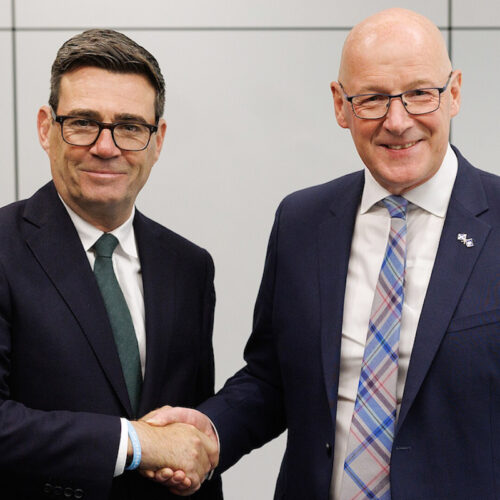

ANDY BURNHAM’S decision to visit Scotland during the SNP’s annual conference in Aberdeen was a calculated political intervention, and one which took the wind out of John Swinney’s sails.
The contrast between the two men is striking. Swinney can appear grey, prickly and distinctly uncomfortable when challenged. Burnham, whatever one’s opinion of his politics, projects a calmer, more assured and charismatic image. As political theatre goes, the Prime Minister’s timing could hardly be more inconvenient for the SNP leader.
But the real problems confronting Scotland’s governing party go considerably deeper than personalities.
At the heart of the argument is the future of North Sea oil and gas, an industry which helped transform Aberdeen into one of Britain’s wealthiest cities but whose decline has left serious economic consequences.
The Westminster government is considering whether to approve the Rosebank oil field west of Shetland after finally approving the Jackdaw gas development 150 miles east of Aberdeen. Energy Secretary Miatta Fahnbulleh indicated last week that a decision on Jackdaw was imminent, but that Rosebank would take longer.
For Aberdeen and the wider north-east, these decisions matter enormously. Further investment could support skilled employment, local businesses and an energy supply chain which has served Britain for generations.
The SNP, meanwhile, finds itself in an uncomfortable position.
Its previous partnership with the Scottish Greens encouraged an approach to North Sea development that placed climate commitments above further extraction. Now, with jobs and investment at stake, the party faces pressure to demonstrate that its energy ambitions can coexist with economic reality.
There is a legitimate debate about emissions, energy security and the pace of transition. But politicians cannot simply wish away Britain’s continuing dependence on hydrocarbons – which produce far more than just fuels.
For the Unionist parties, this presents an obvious political opportunity. They can question whether the SNP’s environmental ambitions have come at too high a price for communities whose livelihoods depend on the industry.
Nor is energy the party’s only headache.
Its political strength remains concentrated at Holyrood, while its Westminster ambitions face a very different financial and electoral landscape. An unexpected general election would test its organisational resources and priorities, although claims that it could afford only a token campaign require stronger evidence.
And then there is the long shadow of Alex Salmond.
The former First Minister’s acquittal in 2020 did not end the controversy surrounding the handling of allegations against him. His supporters continue to allege that senior figures conspired to prevent his political comeback. Those allegations remain disputed and unproven.
Recent disclosures have revived demands for further investigation, while separate legal proceedings concerning access to government records have raised uncomfortable questions about transparency.
For Swinney, this was hardly the backdrop he would have chosen for a conference intended to demonstrate renewed purpose and unity.
The SNP still commands substantial support and independence remains a powerful political cause. But governing Scotland requires more than constitutional ambition.
With Burnham challenging its narrative, the North Sea’s future unresolved and old controversies refusing to disappear, Swinney has plenty to contend with.
The question is whether the SNP can offer convincing answers.
Established in 2006 and celebrating twenty years, ThinkScotland is not for profit relying on donations to publish our wide range of opinions. You can subscribe to our FREE newsletter here – share and follow us on ‘X’ here – like and comment on facebook here and make a donation here. Every contribution helps to meet our overheads.
Photo of Andy Burnham and John Swinney at their first meeting following the former becoming prime minister, by Number 10 – https://www.flickr.com/photos/number10gov/55414125885/in/photostream/, OGL 3, https://commons.wikimedia.org/w/index.php?curid=196068729