
IN CHESS, a player is said to be in ‘zugzwang’ if every possible move he or she can make will result in a bad outcome. This German word summed up the predicament of the Democratic Unionist Party, after the secretary of state for Northern Ireland, Sir Chris Bryant, banned the Orange Order from completing its march down the Garvaghy Road in Portadown.
This was an extraordinary decision by the government, which undermines the principle that the rule of law should apply equally to everyone. Sinn Fein activists, including Northern Ireland’s first minister, Michelle O’Neill, and other members of the party’s Stormont team, stand accused of illegally blocking the road, when the Parades Commission and the Court of Appeal determined that a small parade could take place on the 27th of September.
The residents of the Garvaghy Road, we were told, would suffer unspeakable disruption and fear if 35 Orangemen walked silently past their homes, at 8am on a Sunday morning. Yet, for almost two weeks, the area was swamped with republican protestors, subjected to IRA singsongs and graced with a walkabout by terrorist cosplaying rappers, Kneecap, supposedly in a show of solidarity.
Aside from the un-notified road-block and the impromptu Provo festival, the language from nationalist politicians, journalists and campaigners became increasingly hysterical. The Orangemen and the unionists who supported them were subjected to incessant slurs and abuse. The republican crowds that congregated on the Garvaghy Road listened to speeches that invoked Rosa Parks; sang along to “We Shall Overcome” and were encouraged to resist ‘occupation and fascism’.
It was easy to forget that the only right that was actually infringed during this dispute was the Orangemen’s right, affirmed by the courts, to complete their parade.
This overwrought atmosphere, in the end, had a predictable outcome. After the residents, led by Breandan Mac Cionnaitth, the convicted former IRA bomber, turned down various compromises and their latest legal bid to block the march stalled, the chief constable of the Police Service of Northern Ireland, Jon Boutcher, asked the secretary of state to review the Parades Commission’s determination.
This manoeuvre had every appearance of coordination and Bryant duly banned the parade, “in the best interests of peace”. This choice of words invited unionists to ask where the threats to peace had come from.
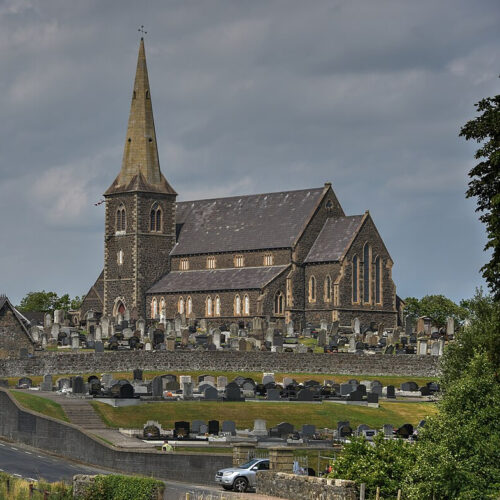
The simple answer was that nationalists’ ability to stop the march was always underpinned by the possibility of violence. At the road-blocks, close to Drumcree churchyard where the Orangemen gathered, IRA men and dissident republicans made their presence felt. The PSNI refused to comment on suggestions by the DUP MLA, Jonathan Buckley, that firearms and canisters of petrol had been assembled, to resist any attempt to force marchers down the road.
Many unionists believe that, ultimately, the threat of republican violence means that the government at Westminster is perpetually inclined to back down whenever Irish nationalists have a particularly shrill tantrum. After all, ministers agreed to create a legal and economic border within the UK, when Dublin insisted that checks on goods and customs procedures between the province and the Republic could become a target for terrorists.
This episode only confirms the worst fears.
The Orange Order’s decision to re-open the Drumcree issue, through a legal challenge, has been debated keenly even by unionists in Northern Ireland. The wisdom of the Parades Commission’s determination has been questioned too. Many people felt sympathy with the Garvaghy Road residents, because of the history of disorder which previously surrounded this dispute in the nineties. Some commentators also suggested the march could alienate voters in the ‘middle ground’, who might otherwise be inclined to vote for pro-Union parties.
The virulent response to the determination, though, has shocked many of those critics. Nationalists have incessantly campaigned for a border poll on Northern Ireland’s takeover by the Republic, which they say would offer a ‘new Ireland’ where all traditions would be valued. The atmosphere of intolerance over the past weeks has all but killed that claim.
And it has raised profound questions about nationalists’ attitude to the rule of law in Northern Ireland, as well as the survival of Stormont.
Sinn Fein was persuaded to participate in power-sharing because IRA terrorists received a de facto amnesty. While unionists found this hugely unpalatable, it was at least supposed to be based on republicans supporting the police and abiding by the law.
Drumcree is just the latest in a line of incidents that suggest these commitments hold only when it is convenient for Sinn Fein.
Many of the politicians who blocked the road, including Michelle O’Neill, have now received letters from the PSNI, inviting them to interview. Unionists, though, are sceptical that effective action will be taken against them. Previously, when Sinn Fein ministers attended the mass funeral of the IRA thug Bobby Storey during a Covid lock-down, a police investigation resulted in no prosecutions.
This leaves the DUP in that political zugzwang. If it continues to operate power-sharing at Stormont, the party stands accused of accepting that, ultimately, Sinn Fein is above the law and nationalist mobs can impose their will on Northern Ireland. There appear to be divisions within the DUP on what to do next. At the same time, its leader, Gavin Robinson, was probably right when he claimed last week that republicans were trying to bait him into collapsing the institutions.
When Stormont has previously fallen, even when it was clearly Sinn Fein’s fault, it has been restored only after unionists have made new concessions to republicans. The current secretary of state, to heighten these fears, has shown himself to be weak, poorly briefed and partial to nationalist grievance-mongering.
Rather than uphold British law in the province, Bryant’s decision implied that the justice system only applies to Sinn Fein and its followers when it suits. That represents a dangerous precedent, and a capitulation to the rule of the mob, which may not only affect Northern Ireland but ultimately the whole United Kingdom.
Established in 2006 and celebrating twenty years, ThinkScotland is not for profit relying on donations to publish our wide range of opinions. You can subscribe to our FREE newsletter here – share and follow us on ‘X’ here – like and comment on facebook here and make a donation here. Every contribution helps to meet our overheads.
Photo of Drumcree Parish Church, Portadown, by August Schwerdfeger – Own work, CC BY 4.0, https://commons.wikimedia.org/w/index.php?curid=74084761