
THE TENTH anniversary of the 2016 Brexit vote was marked by a flurry of books and newspaper articles looking back over that momentous day and reflecting on how relations between the UK and the EU have changed during the subsequent decade.
So why yet another book? Haven’t we already suffered from an overdose of Brexit analysis and comment? As I spell out in the preface of my new book, I wish there hadn’t been any need for me to spend six years writing it but it is, I believe, very much needed because unfortunately, closure of the whole Brexit issue remains elusive. Ten years on, some highly influential figures within the media and the Westminster establishment refuse to accept the result of 2016. Calls for us to rejoin are still being made.
Until recently, for the most part, they remained muted. Now, however, our new Prime Minister Andy Burnham has stressed the need to “keep all the options open” and has refused to rule out the possibility of rejoining. A number of senior figures in his cabinet have criticised him for reopening this subject and furthermore, even some hard-core remainers have come to accept that the likelihood of rejoining is pretty remote as there are considerable obstacles in the way which would not be easy to overcome.
All the same, they can’t seem to stop raising the subject. Never again was born out of my desire that they will finally shut up so that we as a nation can move on and put the whole Brexit issue to bed once and for all.
Part of the reason why the EU issue continues to fester goes back to the failings of the leave campaign. As I argue in the book, leave won because it ran the least bad campaign. We convinced enough numbers of the public (a record-beating number – Ed.) that Brexit was a good idea in order to secure victory in the referendum campaign, but we weren’t so good at coming up with a road map for Brexit or defining the sort of relationship we wanted with the EU once we finally left. Even those in government who seemed keen on the face of it to “get Brexit done” appear to have been more interested in removing the whole issue from their in-trays as soon as possible rather than fighting for the best possible deal for our country.
The net result has been a distinctly sub-optimal Brexit arrangement that has left many of its supporters disappointed while providing rather too much ammunition for rejoiners.
There have been some successes, notably the roll-over of our trading arrangements with most non-EU countries and the striking of new or enhanced deals with others, but we have been too timid in seizing the advantages offered by Brexit to distance ourselves from the EU’s regulatory orbit. Indeed, the Labour government, since coming to power in 2024, has been keen to enhance regulatory alignment and has shunted the outgoing Conservative government’s plan to review all the legislation which originated with the EU into a siding.

Of course, our relationship with the EU will continue to evolve because the EU itself continues to evolve, but if Brexit is to be the success which I believe it can be, the next government needs to take us in the opposite direction and distance our country as much as possible from the over-regulated EU. It must continue to re-orientate our trade towards more dynamic economies and set our businesses free from much unnecessary red tape, especially those smaller businesses who do not trade with the EU but still have to follow its diktats, several years after we broke free.
As I have sought to explain in some detail, none of the many serious problems with which our country is grappling could be solved by rejoining the EU – indeed, in many cases they would be made worse.
Brussels itself represents in a supranational form the top-down technocracy which is falling out of favour with electorates not just in the UK but across much of the developed world, including the European continent. Brexit provides us with the opportunity to update and re-boot our entire constitutional process to bring power closer to the people and force politicians to be more accountable to the people who pay their wages.
Some of the proposals in the book might seem radical at first glance, but the majority of them are derived either from best practice in other countries or from our own past history as a free, sovereign nation. If we wish to be a successful country again, it will require us to reverse the damage which has been done to it since 1997 when Tony Blair came to power, but it will also require us to believe in ourselves again.
Rejoiners are viewing our period as an EU member state through rose-tinted spectacles. The stark truth is that we joined in a moment of weakness, never really fitted in and still wouldn’t if we rejoined. Indeed, no less an individual than the former European Commission President Jean-Claude Juncker said that he did not think rejoining would be possible and that the UK would be cold-shouldered if we tried to do so.
History and geography have made us what we are. We need to accept this and move on. If my book can help make some contribution towards this process then all the effort I have spent over the past six years in writing it will have been more than rewarded.
Never Again is published by VeritasLibrary.com. ISBN: 978-1-0669447-0-5. You can obtain copies from Amazon at https://www.amazon.nl/Never-Again-John-Petley/dp/1066944709.
Established in 2006 and celebrating twenty years, ThinkScotland is not for profit relying on donations to publish our wide range of opinions. You can subscribe to our FREE newsletter here – share and follow us on ‘X’ here – like and comment on facebook here and make a donation here. Every contribution helps to meet our overheads.
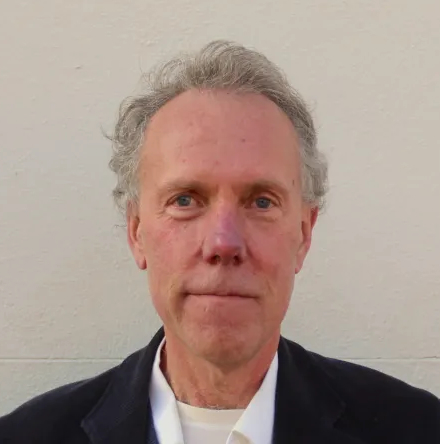
Images kindly provided by the author