
IN A political landscape that can often feel stagnant and uninspired, the possibility of disruption can send ripples of enthusiasm through the electorate. The recent discussions surrounding Elon Musk’s potential involvement with Nigel Farage’s Reform UK party represent such a moment. This partnership could challenge the status quo and shake up British politics in unprecedented ways.
For Scotland, this can be a unique moment to reflect on what it means to embrace change while staying true to free-market principles and individual liberties. With Stark realities of global affairs and domestic governance playing out, Scotland must remain a keen observer – and participant – in these political developments.
Elon Musk is a name synonymous with innovation. He has reshaped industries, ranging from automotive to aerospace, and his penchant for disruption is now turning towards the political arena. Reports suggest Musk is considering a significant financial commitment to Nigel Farage’s populist movement, which aims to pivot British politics toward a more Reform-oriented, free-market platform.
Such a partnership could attract attention and cash to Reform UK, a party that has been steadily gaining traction, aiming to address the discontent many voters feel towards established legacy parties. The prospect of a multimillion-dollar donation could provide the means for Reform UK to amplify its message and expand its reach – a move that would send shivers down the spines of traditional party leaders.
The implications of this are vast. As we know, political funding can often determine the success of a party’s ability to effect change. With significant backing from Musk, Reform UK could become a formidable force in the upcoming English council elections and other by-elections across Britain. The potential partnership represents an opportunity to recalibrate the political compass in a way that embraces individual liberties and economic freedoms.
For Scotland, the rising influence of Reform UK could signify a chance to advocate for a more business-friendly environment. The Scottish economy, historically reliant on sectors such as financial and hospitality services (75%), manufacturing, mining, quarrying, electricity and gas supply (18%); construction (8%) and agriculture and fishing (1%) stands to benefit from any reforms that streamline regulations or reduce taxation – areas where traditional political establishments have frequently fallen short.
If Musk can inject enough capital and visibility into Reform UK, it could also create a platform for Scottish voices advocating for free market principles and economic liberation. Scottish businesses, particularly SMEs around Glasgow, Aberdeen, and Edinburgh, could find allies in a movement driven by the desire to cut red tape and incentivise growth.
Moreover, the potential funding from Musk raises questions about foreign influence on domestic politics – a hot topic in previous electoral cycles. For a nation that values its sovereignty, this might seem concerning. Yet it can also be seen as a challenge to the conventional political conversation, nudging us to discuss and consider our own policies on business and governance free from the constraints of larger entities like the EU.
The essence of Farage’s Reform UK is rooted in dissatisfaction with the political elite. Many voters across the UK increasingly feel their concerns are being ignored or dismissed by the established parties. Farage’s movement taps directly into this sentiment, calling for reforms that resonate with everyday citizens.
The heart of the movement lies in advocating for policies that resonate with hard-working individuals – tax cuts, deregulation, and a strong defence of national sovereignty. For Scotland, this approach can be particularly appealing. It offers an avenue to reclaim economic autonomy in a way that allows local businesses to thrive without the burden of overarching regulations imposed by external entities.
A partnership between Musk and Farage would not only attract attention but could also galvanise support among disillusioned voters. It would reflect a moment where enterprise and free thought stand against the ho-hum nature of Westminster politics. This ideological clash offers a glimpse into a more dynamic political dialogue—one that Scotland’s electorate should embrace.
A pro-free market perspective is vital for Scotland’s economic prosperity. With layers of bureaucracy and high taxation stifling innovation, it is crucial to advocate for an environment where businesses can flourish. The potential infusion of resources from
Musk, should it come to fruition, can spearhead discussions on how to optimise our economy through policy reform that prioritises individual initiatives and entrepreneurship.
In Scotland, opportunities abound within sectors such as food production, whisky exports, and burgeoning tech firms. The traditional silos of industry must be dismantled and creative solutions sculpted, paving pathways for diversification and greater economic resilience.
Musk’s interest aligns with the fundamental belief that business thrives best when it is given the freedom to operate unfettered by needless governmental intervention. Indeed, embracing the principles of free market economics can help revive Scotland’s competitive edge.
While the prospect of external investment in UK politics could be seen as a boon, it is crucial to consider the implications of foreign influence on domestic governance. Should Musk’s financial support significantly change the political landscape in Britain? How will political accountability be maintained? These questions are essential as we navigate our future.
The discourse surrounding foreign donations must be transparent. This raises discussions around setting clear guidelines for political donations to ensure they are in the best interest of the electorate. Voters must feel secure that their interests are being represented without undue influence from overseas interests.
Scotland, with its history of separate institutions and consequential self-governance, must be vigilant against any threat to local autonomy. Control of our political narrative lies firmly in our hands, and we must be vigorous guardians to ensure that external forces do not skew our homegrown aspirations.
To truly harness the potential offered by this new political dynamic, Scottish businesses must remember – the future lies in adaptability and resilience. If Reform UK, bolstered by financial support, can establish itself as a challenger to traditional party dominance, the resulting shift could redefine how we approach our economy.
This is a unique moment to advocate for a pro-business climate that focuses on lowering taxes, removing barriers, and empowering individuals to take charge of their financial futures. With potential support from significant figures like Musk, we could step into a new era in which Scottish businesses access untapped markets and opportunities they previously could only dream of.
The discussions initiated by these political dynamics serve as a reminder that Scotland has always been a land of innovators and entrepreneurs. By capitalising on our unique assets – be it our natural resources, talented workforce, or pioneering spirit – we can be an integral part of the UK’s new narrative.
As Scotland watches intently, the evolving dynamics of UK politics beckon a thrilling, albeit unsettling, prospect for change. With figures like Elon Musk potentially stepping into the political scene, it’s possible we may witness unprecedented shifts in voter priorities, further galvanising support for a pro-free market ethos.
The momentum generated by financial backing for challenger parties like Reform UK holds the potential to enhance Scotland’s position within the UK. It invites a renewed commitment to economic principles that prioritise growth, innovation, and sovereignty. As citizens of this vibrant nation, we must seize this opportunity to steer the conversation toward what truly matters: economic freedom and individual liberties that deliver a thriving local economy.
It’s time for Scotland to advocate boldly for its future, ensuring that as the winds of change blow through British politics, we stand resolute, seizing the chance to chart our destiny in a way that aligns with our core values.
In harnessing this moment, Scotland can emerge not just as a major player in the UK, but as a leader in promoting a future that speaks to the hopes and aspirations of its people.
If you appreciated this article please share and follow us on Twitter here – and like and comment on facebook here. Help support ThinkScotland publishing these articles by making a donation here.
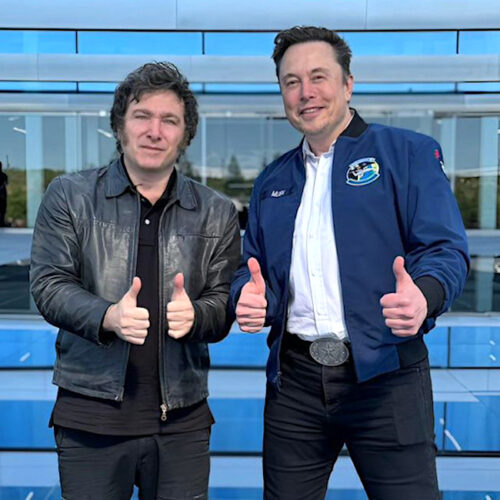
Photo of the President of Argentina, Javier Milei, with Elon Musk by Argentina.gob.ar, CC BY 4.0, https://commons.wikimedia.org/w/index.php?curid=149011102