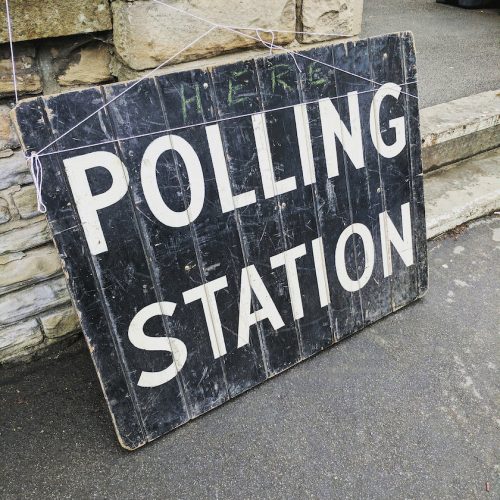

THE MOST STRIKING aspect of yesterday’s council by-election in Fife is the success of ReformUK. From a standing start, Romano Valente, the Reform candidate, took 27.5 per cent of the vote in the Glenrothes West and Kinglassie ward, coming second to the SNP on 44.3 per cent. It’s a strongly SNP area, so there was never any doubt that the nationalists would take the seat.

Where did Reform’s votes come from? It is often assumed that support for Reform in Scotland is flowing largely from ex-Tory voters, and although many Scottish Tories are turning to Reform, so are people who voted for the other parties — or for no party at all. Consider this graphic:

Conservative support has been historically low in the ward, so by far the most significant chunk of votes for Reform came from ex-Labour voters. This was no surprise to those involved in Reform’s ground campaign, who were about as likely to spot a Labour activist as a unicorn. The local party seemed to have given up on trying to win the seat. This speaks to a catastrophic fall in morale, given that part of the ward helped elect Labour ’s former first minister, Henry McLeish.
David McLennan’s win in Whitburn and Blackburn in December produced the first elected councillor for Reform, again in an area where there had been strong Labour support. With the Glenrothes result, a clear trend is emerging at the ballot box in Scotland.
What does this mean for the Holyrood election in May? Scottish Labour is desperate to paint itself as the only challenger to the SNP but this is no longer unequivocally the case. The latest poll put Labour on 17 per cent and Reform on 16 per cent in the regional vote, and Labour on 19 per cent and Reform on 17 per cent in the constituency vote. Labour losing votes to Reform in Scotland is entirely consistent with recent polling in England and Wales – only a Labour propagandist could imagine Scotland would be an exception.
In Fife the by-election result has given rise to renewed calls by the SNP group on the Council that Labour has no mandate to lead the administration. The SNP now has 35 councillors (Glenrothes being its third by-election win in Fife in less than a year) while Labour only has 18 and runs a minority administration, relying on 13 Liberal Democrat elected members and 6 Conservatives. Of course no one seriously expects Labour to heed the nationalist calls and hand over to the SNP.
If such an anti-SNP rainbow coalition is acceptable at council level, why not at national level after May 7th? The fly in the ointment is of course Reform: all the parties have demonised Reform as divisive and their representatives as pariahs (a Reform councillor told me yesterday fellow councillors have walked out because she was in the meeting). Scottish Labour is on record ruling out co-operation with Reform at Holyrood, but this is the typical stance of parties pre-election. The prospect of government as opposed to opposition is liable to change minds.
Established in 2006, ThinkScotland is not for profit (it makes a loss) and relies on donations to continue publishing our wide range of opinions – you can follow us on X here – like and comment on facebook here and support ThinkScotland by making a donation here.