Considering status and contract during the civil rights protests in the deep South
A long but rewarding read
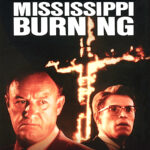
IN A RECENT PIECE, I asked the question distilled by Dom Wightman in his review of my new book, Russia and the Rule of Law: how does law deal with violence? In it, I tried to explain the background to that question from a geopolitical point of view. Here I want to illustrate the issues it raises with reference to a film everyone can enjoy (plotline spoiler alert) on YouTube – Mississippi Burning (1988).
The context is the eternal war between two fundamental approaches to power in human relationships, that of “status” and that of “contract”. All government is an attempt to co-ordinate general behaviour on its sovereign territory and that can be done either by top-down authority (status) or bottom-up by individual autonomy in the private sphere and reciprocity in the public one (contract). (The terms are explained in more detail in the Introduction to Russia and the Rule of Law.)
Status is the ancient method of tribal control, which depends on violence in defence of hierarchy, honour and “traditional values”. Stability is the aim; stasis is the risk. Contract, by contrast, refers to a society which is built up on the basis of voluntary agreements between private individuals or groups, furthering their own ends under law which is made using a broad “social contract”. At its most fundamental, the rule of law means governing with the consent of the governed. Rules are published and debated, unlike in status regimes, which often depend on unwritten rules and the power of personal connections: it’s not what you know, but who you know; not what is good for society but what best suits the status holder.
Britain invented the rule of law, but now it is controlled by status though an unelected bureaucracy which is more powerful than parliament. The European Union does not even pretend to be democratic. It is pure status.
The most complete example of contract government in the modern world is the Constitution of the United States, and the most extreme example of the hierarchies of status is race-based slavery which was legal in the same United States until the Civil War, and whose effects lingered for at least a century. That is the paradox at the heart of the action in Mississippi Burning—and indeed of life in general. Human nature is neither uniform nor consistent (which is why it is able to evolve and adapt).
The film is set in 1964, 101 years after Abraham Lincoln’s Emancipation Proclamation and 99 years after the Thirteenth Amendment abolished slavery nation-wide. Yet much of Mississippi since then was still subject to segregation on a “separate but equal” basis as legitimatised by the Supreme Court in 1896 in Plessy v Ferguson. That was despite the ruling which overturned Plessy in 1954, Brown v Board of Education of Topeka. Strictly speaking, that was a decision related to the de-segregation of public education, but in fact it signalled a new determination in Washington to outlaw racial discrimination as the basis for all public policy. Every citizen of the United States was to be able to avail themselves of the benefits of contract on the basis of the country’s Constitution. That was the policy of Presidents Eisenhower, Kennedy and Johnson.
Mississippi took a different view. Like many former slave states of the American south, much of its white population was determined to defend the discriminatory regime legalised in Plessy. The film opens with a static shot of a pair of public drinking fountains, right next to each other. One has written above it “White” and the other “Colored”. There was no ignoring such distinctions. The two fountains look much the same, the White one perhaps a bit more modern than the Colored one, but both are fixed to a shabby-looking wall in a non-descript building. There was nothing glamorous about the white world of segregated Mississippi, but there was something far worse than unglamorous about the black, or “colored”, world there.
One of the most important aspects of contract generally, and of political contract more particularly, is the right to vote in open, public elections in order to achieve some sort of reciprocity in government. The practical basis of the rule of law, and therefore of contract government, is that those who make the laws are chosen, and can be dismissed, by those who have to obey them. Democracy is the way we try to achieve reciprocity in government today.
Under the so-called “Jim Crow laws”, which had once been given legal cover by Plessy, voting was restricted, with many blacks being disfranchised by states whose rights included determining who was and who was not allowed to vote. The aim was to deny reciprocity to blacks.
By the early 1960s that regime was coming under attack by civil rights activists, often from Washington, New York, Chicago and other cities of the more liberal north. Registration of black voters involved trying to get discriminating states to obey Federal law as it had been in theory since the Civil War.
A notorious incident on 21 June 1964, in Neshoba County, Mississippi, provided the essential plot for this film. That is fictionalised into Jessup County, and in both cases three civil rights workers drive into town—two white, Jewish New Yorkers and one local black—and are murdered by local racists. (Incidentally, this was a fortnight before President Johnson’s Civil Rights Act was signed into law.) In both cases, the murders were committed by members of the Ku Klux Klan with the active connivance and partial involvement of the local police. The bodies were buried in an earth dam at a local reservoir.
Initially this is thought to be a missing persons case. The Sheriff’s Office adopts a “nothing to see here” attitude to the disappearance of the three young men. The film starts with the arrival of two FBI agents who have been tasked with finding out what happened.
“Mr Anderson” is brilliantly played by Gene Hackman as a seasoned agent who came from a similar community in Mississippi and knows the local ways, while his boss for this assignment, “Mr Ward” (no Christian names until the last scene of the film), is a younger man who has been sent down by Washington to take charge of the investigation and make sure it is conducted properly. He has a disciplined but humourless and slightly preachy approach to “Bureau procedure”, which implies law-based limits to FBI investigation methods. He is played just as brilliantly by Willem Dafoe.
The film was directed, equally brilliantly, by Alan (later Sir Alan) Parker, the Londoner who was responsible for classics like Midnight Express (1978), Pink Floyd – The Wall (1982) and The Commitments (1991). He was nominated for the 1989 Academy Awards as Best Director for Mississippi Burning, which was also nominated for Best Film (it won the Oscar for Best Cinematography). Importantly from the capital accumulation point of view, the film cost $15 million dollars to make and grossed $35 million ($41m and $95m in today’s prices).
The whole drama of the film centres around the clash between violence and legality in the investigation of the crimes, in other words: what are the limits of Bureau procedure? The plot is necessarily complicated and I will not say much about it. My aim is to show how Ward and Anderson crossed swords over the main issue: how does law deal with violence?
Mr Ward is a stickler for due process but, as Mr Anderson keeps suggesting, that does not work in places like Jessup County, Mississippi, where the whole black community is intimidated. “There ain’t nobody gonna talk to you,” most of them tell the FBI, while others limit themselves to: “I got nothin’ to say to you, Mister.” Others just walk away in angry silence.
The white community, by contrast, tries to treat the whole thing as a joke. Early on, the Sherrif of Jessup County, a splendidly obese, gum-chewing raconteur, called Ray Stuckey (played by Gailard Sartain), tells the waiting reporters that it is all a publicity stunt “got up by the NAAC people”, adding; “Bet you all don’t even know what it stands for. It is for Niggers, Alligators, Apes, Coons and Possums.” Deputy Pell explains that FBI stands for Federal Bureau of Integration.
Rather more wittily, Jessup County’s Mayor Tilman tells reporters, speaking to camera, what he thinks of such an investigation just seven months after President Kennedy’s murder: “If the entire Secret Service couldn’t protect the President of the United States, how in hell are we supposed to protect a few Negroes? I’m telling you again, it ain’t nothin’ but a bunch of lowlife white trash drinkin’ too much cheap alcohol. More like paint thinner and snake juice, because this state’s as dry as a Martini, and we got the alcoholics to prove it.”
Their point is put more aggressively by “Clayton Townley, local businessman”—but actually local spokesman for the White Knights of the Ku Klux Klan. “We do not accept Turks, Mongols, Tartars, Orientals nor Negroes because we’re here to protect Anglo-Saxon democracy and the American way.” The Klan has an upbeat song about its hostility to racial integration which ends with a rousing chorus: “Never, never, never, I say/ The Ku Klux Klan is here to stay.”
In the face of this, Mr Ward is relentless, as is the contract way, determined to change the world one case at a time. The “Hoover boy” and his bosses are clearly determined to crush racial status in the South. Washington is implacable in its new crusade against racism. It is, you might say, “trampling out the vintage where the grapes of wrath are stored.”
The repetitive beat of the soundtrack emphasises the inexorable quality of a full-dress Federal investigation into the political crimes of a small, rural community in the beleaguered, impoverished and defeated South. The last point is critical: negative status like racism turns sour when its pride does not allow it to forget a defeat nor forgive an enemy it considers unworthy.
Ward utters a key line when questioning Deputy Sheriff Clinton Pell, for the umpteenth time. The young FBI man is getting nowhere with his procedurally correct inquiries, so he visits Pell at home. They meet in Pell’s bleakly down-at-heel sitting room where he is watching a baseball game on a fuzzy, black and white television set and eating his dinner off a tray on his knee, while his wife sits in the corner silently embroidering.
Pell tries to pretend the date of the crime means nothing to him: “June 21st? Which?” Ward says, “Deputy, we both know what day we’re talking about, so let’s do this civilized.”
The word “civilised” in this context implies “contract”, or, as Ward says so often to his colleague that it becomes almost a joke: “Bureau procedure, Mr Anderson”. But it is not helping get at the facts of status’s crimes. We later learn that it was Pell who arrested the three boys for speeding during the afternoon of 21 June. He then held them until late that evening before releasing them, thereby giving the Ku Klux Klan time to organise. They followed them out of town, then forced them off the road in a lonely, forested area where, with Pell’s connivance and participation, they shot each of them in the head at point blank range. Negative status demands violent retribution against anyone who disrespects local customs, views and shibboleths. This is its way of trying to inspire respect.
Operating rather differently, Anderson barges cheerfully into the seedy-looking social club where the racists drink (in a county “as dry as a Martini”) and is met with predictable hostility. Not only does he represent “outside law”, he is also an outsider himself now. By leaving Mississippi he has become a deracinated “anywhere” rather than remaining a white “somewhere” like them.
Status has a sense of place as well as of tradition, but both are perverted by racism in this community. In the defensive Mississippi of sixty years ago the shared perception of local hierarchies and the way they are disrespected by outsiders turns the positive emotion of community solidarity into something nasty and hostile. This becomes evident when Anderson tries to link his past with their present.
“We ain’t too interested in your good ol’ Mississippi boy stories, Anderson, you ain’t from here no more. Why’d you leave, anyway?”
“I just wanted a change of scenery. You know, the grits started leavin’ a bad taste in my mouth,” replies Anderson, smiling sociably.
“Well, if that’s how you feel about it, Mr. FBI Man, why don’t you drink up that beer and get the hell on outta here, and back to your commie, nigger-lovin’ bosses up North?” snarls a muscular but unsmiling somewhere in a tone of repressed violence. “All I know is we got 5,000 niggers in this county who ain’t registered to vote yet. And, as far as I’m concerned, they never will. So you can tell your stiff suits up there in Washington, DC, that they ain’t gonna change us one bit. Unless it’s over my dead body.”
That last is the authentic voice of status—willing to die for the right cause. Whatever the law may say, blood is thicker than ink.
Frustrated, Mr Ward calls in a hundred naval reservists to help with the search for the bodies. Soon he also has a large number of regular FBI agents working in a large building the Bureau has rented in the centre of town. But it makes little difference. They find clues, they get leads and they get closer to the truth, but still nothing concrete.
Yet still the intimidation of blacks continues. There are burnings, fire-bombings and the vicious beating of those who won’t cringe. Their churches are torched and their livestock burnt alive while locked in its night-stalls. Ward completely fails to understand how people can behave in such a bestial fashion. Anderson, by contrast, does. He grew up with racism. He understands (unlike too many judges in Britain today) that “Bureau procedure” has its limits.
The question facing Ward, and all people committed to contract government and due process, is how to react when confronted by widely-condoned thuggery on an uninhibited scale. How, in other words, does law deal with the irrational violence of defensively perverted status?
The short answer is that it, if it really wants to do justice it must be prepared to “go status” itself. There is no other option. Even when a black teenager gives the FBI men a tip-off, and they find some other important evidence, they cannot get anyone to go “on the record”, which would have been be necessary for a conviction by due process.
Then one of the locals opens up cautiously. Using all the arts of lyrical status—flowers, sympathy, genuine friendliness—Anderson coaxes out of Pell’s charming but submissive wife the truth about her husband’s movements on the night of the murders. He was not at home when he claims he was. His alibi is destroyed.
Pell’s wife was born in Jessop County. She knows “there are a lot of good people in this town.” She has no racist inclinations herself and is not going to be intimidated, even though she sees the mood in town turning “ugly”. She is frightened but determined not to be drawn into the conflict provoked by the arrival of the FBI. Anderson says to Ward at one point that if they carry on as they are, they will start a war in Jessop County. Ward replies that there is a war in progress already.
The result of the confession is that the FBI men know the police and the Klan were in cahoots over this. But that is not enough to go to court with in a contract society. They need hard evidence along with much more detail. Who actually pulled the trigger?
Bureau procedure is not working. In fact, nothing works in the face of white silence and the continuing intimidation of the blacks. Not only that, when Pell is told that his wife has talked to Anderson, he comes home with three fellow Klansmen and beats her unconscious, putting her in hospital.
Ward objects to Anderson’s methods. “We’re not killers,” he says. “That’s the difference between them and us.”
Anderson replies angrily: “That’s the difference between them and you!”
Ward says, “You’re no more like them than I am.”
“Wrong,” says the old Mississippian.
Eventually, frustration mounts to the point where they come to blows. It is only a brief scuffle, but after they disentangle themselves, Ward is holding his gun to Anderson’s temple. Still breathing heavily, the Bureau procedure man turns status himself: “We’ll go after all of ’em, together.”
Anderson says contemptuously, “You wouldn’t know how.”
“You’re gonna teach me how.”
Anderson pulls super-status and says, “You don’t have the guts.”
The plucky, determined Hoover boy says, “Not only do I have the guts [status] but I have the authority [contract].”
“What is that supposed to mean?”
“New rules. We nail ’em any way we can, even your way,” adding when Anderson shows signs of disbelief, “Your way. With your people. Whatever it takes.”
Bureau procedure is ditched and the pace quickens. It starts with an old-fashioned punishment beating of Deputy Pell himself in a barber shop, administered by Anderson with a cut-throat razor in one hand and the door blocked by two sinister-looking FBI men. Ward is appalled but does not intervene to save the battered, blood-stained and latterly unconscious Deputy. This is not sadistic bullying, it is legitimate contract enraged by open abuse of its implied terms. At one point, Anderson holds Pell’s head against the wall mirror, shouting at him: “Did you strike a blow for the white man, that night you beat up your wife?” And much more to that effect.
The climax of the Anderson approach is the most important scene in the film. It involves Mayor (“dry as a Martini”) Tilman who knew everything that had happened on the night of the 21 June, but who had the wit, like Sheriff Stuckey, not to get involved directly. Tilman’s guilt is by association only, but that does not matter to Anderson. He gets one of “his people”, a rough-looking black FBI agent from out of town, flown in to crack the most important nut.
Tilman is kidnapped and taken to a remote shack well away form “civilisation”, where he is tied up, gagged and sat opposite the outsider. Staring goggle-eyed across the table at his unsmiling interrogator, Tilman is forced to listen to the story of “a young kid called Homer Wilkes who had done nothing wrong except be a Negro”. Walking home one night he was kidnapped by three white man who took him to “a shack, a shack like this one, and they took out a razor blade, a regular old razor blade, like this one,” the interrogator says picking just such a razor blade out of a paper coffee cup. “They pulled down his pants, and they spread his legs, and they sliced off his scrotum. Put it in a coffee cup.”
The bound Tilman is goggle-eyed and sweating as the sinister-looking interrogator—we never learn his name—asks menacingly: “Do you know how much you bleed when somebody cuts off your balls? Huh? When they found Homer, they said, he looked like he’d been dipped in blood up to his waist. He was barely alive when they got him to the hospital. He can hardly walk now.”
The interrogator gets up from his chair and down to business. Walking round the shabby table to Tilman, he wrenches him to his feet, and grabs the belt on his trousers.
“Mayor, we know you know who was there when those three civil rights boys was murdered. We know you know who pulled the trigger.”
He starts undoing the Mayor’s belt with one hand while still holding the razor blade with the other. “Is there somethin’ you wanna say to me? Huh?”
Breathing heavily, Tilman nods. That does it. The wall of silence has cracked. A cheap razor worked where Bureau procedure failed.
Turns out that it was Deputy Pell and one of the Klansmen who fired the shots that killed the activists. Though Tilman spills all the beans, this is still Mississippi. Ward and Anderson both know that they are unlikely ever to get a conviction from a local jury—the safeguard of liberty—in that state, so they concentrate on civil rights abuses, which are a Federal crime and triable in a Federal rather than a state court.
There is much more to the story than that, and more status-based skulduggery from Mr Anderson but, equipped with Tilman’s induced confession, they are able to strong-arm all the reluctant witnesses and finally get cases into court where they achieve convictions. Pell gets ten years, as does Clayton Townley; others get similar sentences, except for one Klansman who had helped after being offered witness protection and Stuckey, who is acquitted. Tilman hangs himself, presumably out of guilt provoked by a vestigial sense of justice which tells him that they are also guilty who stand and watch while serious crime is being committed but do nothing to prevent it.
It is hardly necessary to emphasise that Anderson’s methods were more like those of the Wild West when a new sheriff rides into town determined to deal with the black hats. But the rule of law means that law is sovereign and, as such, is free to be inconsistent in local matters when wider considerations of general justice demand it: “He hath loosed the fateful lightning of His terrible swift sword/ His truth is marching on…”
In the end, the way law deals with violence is, if absolutely necessary, to get even more violent itself. Status can never be legislated away. It is part of human nature. People are not machines. Contract has to find a way to master status’s defensive violence if it is to survive. It has to be prepared (unlike Britain and Europe today) to take on all comers.
This film is a deathless illustration of the universal truth that, whatever the rules, force always wins in the end. We live in an open-ended physical universe, not a conceptually closed system. Life is not a game with rules, like chess. Contract tries to create a system based on law which makes everyday life easier for all and more profitable for those prepared to work hard and respect the rules. But it also has to generate enough force to compete with hostile status.
The West made much of the world safe for law-abiding contract in the face of destructive wreckers. But the price of freedom is eternal vigilance. Law-abiding societies have to defend themselves against all who want to undermine the law. Unless they have the will and the means to act independently, the words “equal justice under law” will have no further meaning and will have to be erased from the plinth above the entrance to the US Supreme Court and the principles of Magna Carta dishonoured.
Established in 2006 and celebrating twenty years, ThinkScotland is not for profit relying on donations to publish our wide range of opinions. You can subscribe to our FREE newsletter here – share and follow us on ‘X’ here – like and comment on facebook here and make a donation here. Every contribution helps to meet our overheads.
Images courtesy of Orion Pictures.