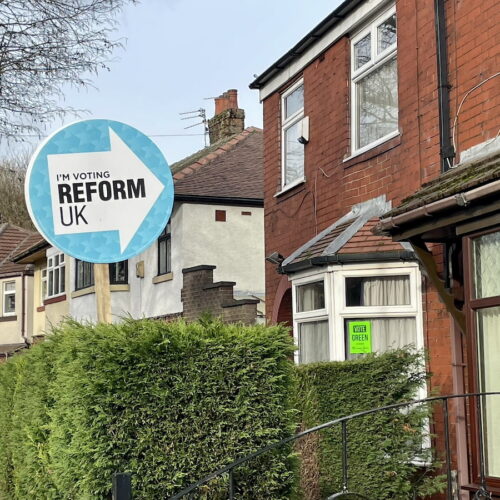

National policy “bombs” dropped from thirty thousand feet rarely land in these cities. Abstract tax plans or sweeping pledges rarely resonate. Urban political credibility is built locally: through councillors, community networks, and candidates who show up consistently.
The recent performance of the Green candidate in Gorton illustrates the point. She may not be the candidate some parties would choose, but she is representative of the area, has council experience, and has delivered locally. Voters respond to presence. Engagement, competence, and familiarity matter more than ideology delivered from Westminster.
This dynamic is not unique to Manchester. For much of the twentieth century, the Scottish National Party struggled to gain traction in Glasgow, a city shaped by Labour traditions and strong Catholic networks. The party was widely seen as distant from these communities.
In the 1980s and 1990s, Alex Salmond recognised the barrier was relational, not ideological. The SNP did not abandon its core objectives, but it changed its tone and presence. It engaged seriously with communities that long assumed it was not speaking to them. Local candidates built credibility through council work, community involvement, and sustained presence.
The result was gradual but decisive. By the 1990s, the SNP made real progress in Glasgow. Over time, the city became a stronghold rather than an obstacle. The lesson is simple: communities are not hostile by default. They are often unaddressed. Trust grows through presence, respect, and practical delivery.
Family, Care, and Civic Presence
Anyone who has worked closely with Manchester’s professional and working communities quickly notices patterns that rarely appear in political commentary. Many Pakistani families, for example, keep elderly relatives at home. Responsibility for extended family is a lived reality, not an abstract principle. Many run businesses or work long hours while maintaining socially conservative values and strong family cohesion.
Decades of policy, by contrast, have monetised family duties and outsourced care to the public sector. In doing so, we forget that the family sector is the missing estate of the Right: a source of social cohesion, responsibility, and resilience rarely valued in political strategy. Communities such as British Pakistanis demonstrate powerful lessons in managing care, supporting work, and sustaining generational cohesion — lessons that can and should be relearned. Other communities, such as the Chinese display similar markers.
Just as Irish Catholics became a large and enduring part of Scottish life, urban Britain now has a large Pakistani population, and that simply isn’t going to change. We must credibly represent them, even if, and especially if, they are not yet ready to vote for the Right. Engagement is not about immediate electoral returns; it is about building trust through presence, understanding, and practical policies that respect people’s lived realities.
Policy can act on these lessons. A serious centre-right approach should offer a bundle of practical, family-focused and economic policies, including:
- Transferrable tax allowances from vulnerable adults to family carers, reducing the financial burden of care and keeping families together. Shared residency of vulnerable adults with their carers, while not fool proof, is a reliable proxy for real care delivery: care is presence, and presence builds trust and dignity.
- Slashing fuel prices, relieving households and small businesses from excessive energy costs and improving economic mobility.
- Cutting red tape for small businesses, helping family-run enterprises and local entrepreneurs thrive, creating jobs and stabilising communities.
These policies appeal broadly across Britain, but they resonate particularly with communities for whom family responsibility is central. At the same time, we must acknowledge that social cohesion remains a challenge in diverse urban areas. We can recognise and learn from families who succeed, while still addressing broader civic integration. Humility is key: policy should enable success where it already exists, rather than impose it from above.
Integrating these lessons with local engagement strengthens the broader argument: political credibility comes from understanding people’s daily lives, respecting their values, and delivering tangible improvement. In post-industrial cities, voters respond to leaders who combine presence, competence, and practical policies that enhance both opportunity and dignity.
Economic renewal and local authority
Something deeper underlies the political mood in post-industrial cities. For decades, these areas have been promised renewal. Yet productivity outside London lags, wages remain lower, and investment has often failed to match industrial decline. This is not a short-term downturn but half a century of restructuring.
Communities that have lived through prolonged stagnation are rarely persuaded by rhetoric alone. They want work that restores routine and income, infrastructure that connects them to opportunity, and civic pride that affirms their value. Bread and roses: economic security alongside dignity. Security without pride feels hollow. Pride without opportunity feels artificial.
Britain remains united by institutions, law, and civic norms. Borders, defence, macroeconomic policy, and migration rules must operate nationally. But success requires recognising that regions differ in economic history and social reality. Uniform policy has often failed. Effective unionism does not demand identical policy everywhere; it demands understanding local realities while maintaining cohesion.
Long-term unemployment is often intergenerational. National growth does not reach every estate. One approach is redirecting welfare toward employment activation. Targeted National Insurance relief for employers who hire the long-term unemployed, combined with accredited training and monitored progression, creates bridges back into work. This is not about subsidising low wages; it is about restoring routine, dignity, and opportunity.
Manchester also has real strengths. Advanced manufacturing, logistics, digital services, engineering, and university-linked life sciences provide a foundation for growth. Apprenticeships should align with these sectors. Small firms should integrate into regional supply chains. Brownfield land should prioritise productive use. Transport must connect estates to hospitals, industrial parks, universities, and logistics hubs. Tram extensions, bus prioritisation, and cooperation with local taxi services make shift work viable. Mobility is measured by whether people can reach employment, not abstract policy.
Delivering these outcomes requires practical authority locally while remaining within a national system. Apprenticeship funding should reflect local industry. Brownfield redevelopment must involve councils. Employer incentives can be administered locally within national fiscal rules. This is not fragmentation. It is unionism that recognises equal citizenship does not require identical policy everywhere.
Bread and roses remain the test: economic opportunity and civic dignity together.
Political credibility comes from presence, not policy alone. Communities respond to leaders who understand their circumstances and deliver visible improvement.
Manchester is not hostile. It is sceptical. It has heard promises before. But a confident United Kingdom can control borders, maintain a clear migration framework, support work and enterprise, strengthen local economies, and equip cities with the tools to solve their own problems.
The lesson for any national political movement is clear. Post-industrial Britain will not be persuaded by slogans from afar. Trust must be built locally, through work, opportunity, and visible results. Any party capable of delivering the full policy bundle — slashing fuel costs, transferrable tax allowances for carers, and cutting red tape for small businesses — seriously and consistently, will shape Britain’s political future.
Established in 2006 and celebrating twenty years, ThinkScotland is not for profit relying on donations to publish our wide range of opinions. You can subscribe to our FREE newsletter here – share and follow us on ‘X’ here – like and comment on facebook here and make a donation here. Every contribution helps to meet our overheads.
Photo of Gorton by-election posters by Rcsprinter123 – Own work, CC0, https://commons.wikimedia.org/w/index.php?curid=184929487