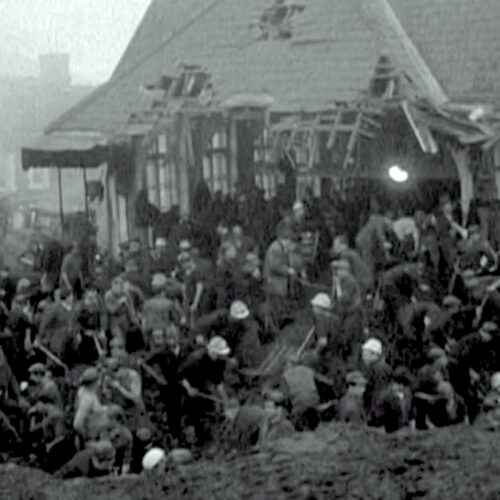

WATCHING WHAT HAPPENED at Aberfan is incomprehensible. All those children lost in what reads like a horror folklore story where a little generation were stolen in a dark cloud. The level of pain as shown in the BBC2 documentary Aberfan: The Village That Fought Back —viewed from the comfort of 2026 — makes me wish I hadn’t watched it.
Like seeing a horror movie, I couldn’t sleep for thinking about what the victims, the families, the community, and the little ones who survived suffered.
Sad, bleak and desperate as it was, other emotions also hit me – fury and fear. Fury at the pantomime villain buffoons in charge of the National Coal Board and fear of the power imbalance that, incredible as it seems, made it even worse.
The Labour government at the time endorsed tiny payouts if parents could prove they were close with their children.
If it was today one might think these powerful people would happily be fried, at least metaphorically. That’s some comfort. The media would more likely expose them. The buffoons of 1966 responded the way they did because they had no fear of repercussions. That’s their professional defence. But they also were human beings. What was their moral defence—what was their thinking?
There was only one way their moral defence allowed them to sleep at night, and it’s a truth that has not changed as much as we’d like: poor people in 1966 were not thought to feel the same way about their children as the affluent.
That core belief has sustained. The media can be a fantastic advocate, but look at what and who they cover, and affluent people are shown as being just more feeling. Poor children who make tragic headlines are now useful to the media in showing errant parents. No errant parents for us to put in the stocks? Then you’re a footnote.
But it’s not enough to be affluent. Looks help. Madeleine McCann’s media frenzy wasn’t just because the parents were middle-class doctors. Kate McCann looked good. Articles about her looks, like Sienna Miller’s big sister, were in mainstream media along with articles on where she bought her clothes. How to get her look, in other words.
Currently Lindsay Clancy is media gold — the pretty ‘victim’ of mental health who happened to strangle her three young children. She was a good mother, say her literal fans. It’s not new, and moaning the media focus is being unfair is a little like arguing Hollywood is biased in favour of pretty people.
In 1966, had those children been of affluent families, there would have been zero disdain. In 2026, we like our victims or perpetrators to be pretty and rich. Maybe not much has changed at all.
You can find Aberfan: The Village That Fought Back here.
Established in 2006 and celebrating twenty years, ThinkScotland is not for profit relying on donations to publish our wide range of opinions. You can subscribe to our FREE newsletter here – share and follow us on ‘X’ here – like and comment on facebook here and make a donation here. Every contribution helps to meet our overheads.
Image courtesy of BBC Two.