
The success of Sam Ryder in 2022 – coming second only following a massive popular vote for the Ukrainian entry after Putin had invaded a few months earlier – demonstrated something important: Britain can still compete when we decide to take the contest seriously. Ryder’s performance succeeded not through irony or gimmickry, but through professionalism, warmth, preparation and confidence. Europe responded positively because the UK finally appeared enthusiastic about participating rather than apologetic for doing so.
That lesson should not be forgotten.
Scotland now has an opportunity to lead a new national approach through the creation of an annual “Pride in the Clyde” festival: a Glasgow-based competition dedicated to developing and offering a world-class Eurovision entry for the United Kingdom each year.
This would not be a nationalist gesture, nor an anti-British one. Quite the opposite. It would represent Scotland stepping forward confidently to contribute to a shared national British effort.
Critics may instinctively recoil at the idea of Scotland taking a leading role in selecting a UK Eurovision entry, but we already understand similar arrangements perfectly well in sport. The Scotland national football team is not viewed as a constitutional threat; it is simply an expression of civic pride and cultural identity within a wider British context. Millions of Scots who disagree fundamentally about politics still unite behind the team because sport creates participation, belonging and collective ambition.
Music can do the same.
Eurovision is no longer a niche novelty programme. It is one of the largest live entertainment events in the world, attracting vast audiences across Europe and beyond. Younger viewers increasingly see it not as kitsch, but as a serious cultural platform combining music, performance, staging and national branding. Countries such as Sweden understand this perfectly. Their national selection competition, Melodifestivalen, has become a major cultural institution in its own right, drawing huge television audiences while developing artists, songwriters and producers year after year. Sweden’s repeated Eurovision success is not accidental; it is the product of long-term investment and national confidence.
The UK, by contrast, too often behaves as though caring too much would somehow be undignified.
That mentality guarantees mediocrity.
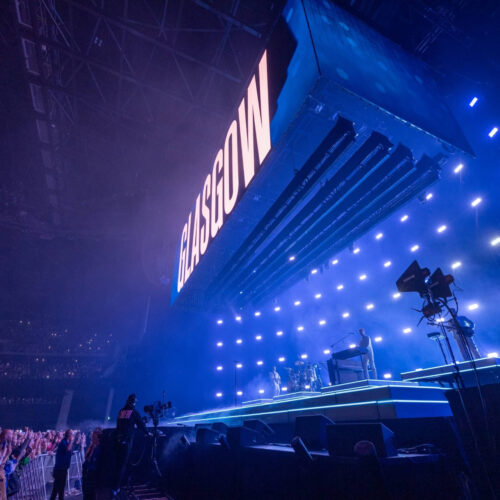
A Scottish-based Eurovision festival could help reverse this culture of managed decline. Glasgow is already one of Europe’s great music cities. The OVO Hydro is a world-class venue capable of hosting an event with genuine international prestige. Scotland possesses deep musical talent across pop, electronic, folk, indie and orchestral traditions. Combined with strategic support from organisations such as Creative Scotland, broadcasters, promoters and private sponsors, “Pride in the Clyde” could become a powerful annual showcase for British creativity.
Crucially, Britain already possesses one enormous advantage many countries would envy: guaranteed access to the final through the UK’s financial contribution to the contest. Instead of treating that privileged position with indifference or embarrassment, we should recognise it as a significant opportunity. The United Kingdom effectively begins the competition already on the main stage. The question is whether we intend to use that platform seriously.
A Scotland-led process would say clearly: yes, we do.
Importantly, the tone matters.
This proposal should not be framed as “Scotland versus the UK”. It should be framed as Scotland helping Britain succeed. In an age when public discourse is often consumed by constitutional trench warfare, there is something refreshing about a project rooted in contribution rather than grievance.
Whatever our political differences, surely we can agree that Scotland is capable of cultural leadership.
The wider economic benefits could also be substantial. A successful annual festival would strengthen Glasgow’s tourism economy, attract international visitors, create opportunities for young artists and reinforce Scotland’s reputation as an outward-looking cultural nation. Eurovision itself generates enormous online engagement and media attention. A Scottish-based pre-selection event with strong branding and high production values could quickly develop an audience well beyond Britain.
There is also an important civic dimension to this idea. Shared cultural experiences matter in fragmented societies. They give people opportunities to gather, celebrate and feel part of something larger than themselves. Football tournaments achieve this regularly. Major music events can too. A Eurovision festival on the Clyde every March or April could become a moment of national confidence and joy rather than cynicism and division.
Some will inevitably dismiss the concept as frivolous. Yet soft power and cultural identity are not trivial matters. Countries increasingly compete not only through economics and politics, but through creativity, visibility and emotional connection. Eurovision offers a rare opportunity to project openness, talent and modern national identity to hundreds of millions of viewers.
Scotland should embrace that opportunity.
The message behind “Pride in the Clyde” is ultimately simple: stop retreating from shared cultural spaces and start leading within them. Stop assuming defeat before the competition begins. Stop treating enthusiasm as naïvety.
Britain succeeds when its constituent home nations bring confidence, energy and imagination to common projects. Scotland has the capability to do exactly that for Eurovision.
Confidence is contagious. Eurovision success begins not with voting patterns or geopolitics, but with the decision to participate wholeheartedly.
Established in 2006 and celebrating twenty years, ThinkScotland is not for profit relying on donations to publish our wide range of opinions. You can subscribe to our FREE newsletter here – share and follow us on ‘X’ here – like and comment on facebook here and make a donation here. Every contribution helps to meet our overheads.