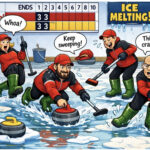
IT IS NOT just industry that is being devastated by the UK’s self-inflicted high energy costs resulting from Net Zero policies – sports, leisure and events venues also consume large amounts of energy and have had to consider their viability over the last few years.
While the closure of refineries, steel mills and potteries receive the main attention of national media the local impact of cultural and sporting venues leaves its own pernicious impact on local communities. These socially-orientated businesses generally do not qualify as Energy Intensive Industries for discounted ETS charges, but unknowingly will be subsidising the ETS costs of the industries that do qualify.
Ice Rinks and Curling Centres
Ice rinks across the UK are closing, and others are threatened with closure due to massive and “unprecedented” increases in the energy costs of maintaining their ice floors. Ice rinks are heavily energy-intensive due to their size and use of refrigeration, lighting, and dehumidification.
The Plymouth Pavilions Ice Rink, a local fixture for some thirty years, closed on 1 January 2023 after it was branded as “wholly unsustainable” due to high energy costs. The Ayr ice rink – home to 550 skating members and forty curling clubs – closed permanently in September 2023 after 50 years of operation. Its annual energy costs doubled to £ 153,000, requiring another £150,000 of turnover to survive. Its daily energy bill rose from £419 to £880; finding an additional £461 a day, every day, just couldn’t be done.
Even in London, the ice rink at the Sobell Leisure Centre in Islington did not reopen after being closed during the pandemic. Its high energy costs, which accounted for 70% of the centre’s total electricity consumption, were given as the main reason.
Inverness Ice Centre has had to close its ice rink for three months of the year since 2023 due to spiralling energy costs of refrigerating its ice floor. The cost of operating its refrigeration plant more than doubled, from £12,000 to £30,000 per month. Inverness went ice-free from April to July outside the curling season and instead hosted a whisky festival, boxing, music, and videoed football events to cut costs and raise income.
Other Scottish rinks, such as Aberdeen, Perth, Forfar, and Elgin, have experienced the same difficulties and have had to adjust their annual opening schedules. In 2023, Scottish Ice Rink Association president Mike Ferguson said his Forfar business’s monthly gas bill was set to rise from £2,000 to £14,500, while in April 2025, Curl Aberdeen reported its energy costs had rocketed by £160,000 a year. Perth City Council has recommended merging two leisure centres into a new venue without an ice rink. The cost of energy for ice rinks remains an existential threat to curling and skating, which have traditionally been Team GB’s most successful Winter Olympic sports.
Swimming pools
Rising energy costs have forced many swimming pools to implement drastic measures, including permanent closures, temporary winter shutdowns, and temperature reductions to remain viable.
Over 65 public pools closed in the UK between 2019 and 2022, either temporarily or permanently, due to a combination of rising energy costs, staff shortages, and chemical supply issues. Industry bodies like Community Leisure UK warned in 2023 that up to half of the UK’s community pools could face closure or service cuts without sustained government intervention. Swim Wales also warned that 150 of 500 pools faced a similar threat of closure.
Some leisure operators reported their annual energy bills tripling or more; for example, Freedom Leisure saw its nationwide energy costs rise from £8m to £20m, while individual sites have seen annual costs jump from £180,000 to over £600,000.
To offset costs, approximately 15 per cent of UK councils have permanently or temporarily lowered pool temperatures, typically by about one degree. Other facilities have reduced opening hours or closed energy-intensive features, such as saunas.
Examples include Batley Baths in West Yorkshire, which was permanently closed due to soaring energy and operational costs, and New Forest District Council, which closed saunas across several leisure centres to save on energy costs.
The nationwide problem caused the UK Government to introduce a £63m investment fund to help pools manage immediate energy pressures and transition to ‘more energy-efficient systems’ like heat pumps and solar panels. While the Energy Bill Relief Scheme was introduced to provide temporary wholesale price discounts for non-domestic users, due to the high energy costs following the war in Ukraine, the inexorable rise of energy costs due to Net Zero policies have continued the suffering of ice rinks and swimming pools. Another impact has been on the high cost of refrigerating beer cellars, which has contributed to the closure of many pubs and clubs.
The Net Zero policies, of an Energy Profits Levy (windfall tax), the Oil and Gas Price Mechanism, the Carbon Price Support tax, and the restrictions on fracking, exploration and development of new fields all contribute to far higher consumer prices for the public and businesses. They are not even part of the UK’s Paris Agreement commitments; removing them would reduce costs, revive industries, and boost domestic supply.
The end of Net Zero cannot come a moment too soon, but Labour and the SNP are thirled to it, the Conservatives accelerated it and doubled down on it – and thus cannot be trusted on it – while the Greens believe Net Zero does not go far enough! Only Malcolm Offord’s Reform UK Scotland, has announced plans to end it to help fund tax cuts and reduce the costs that produce higher prices. No one else is openly willing to change the political consensus favouring Net Zero. Until the political landscape changes Scotland’s ice rinks and our living standards more generally will continue to be threatened by a credo that puts economic nihilism at the core of Scottish Government policy.
Established in 2006 and celebrating twenty years, ThinkScotland is not for profit relying on donations to publish our wide range of opinions. You can subscribe to our FREE newsletter here – share and follow us on ‘X’ here – like and comment on facebook here and make a donation here. Every contribution helps to meet our overheads.
Cartoon of melting ice rink courtesy of the Great British Business Council and its publication “Premeditated Industrial Destruction“.