FAIRLY RECENTLY, I wrote about how the SNP is not a governing party but a campaigning outfit (‘Campaigning, not governing’, Think Scotland, June 12, 2025). Its leaders have no idea about how to run a country, and they spend our money and all their energies on campaigning against the UK and against those who defend it.
The SNP leadership is not equipped, intellectually, tactically or temperamentally, for the hard grind of devising detailed policy that will work and implementing it. Its leaders, or their SpADS, think up various wheezes, on the hoof, which they turn into pledges, and then, having done next to no planning whatsoever, wonder why they are unable actually to turn these pledges into viable policy.
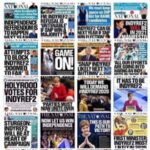
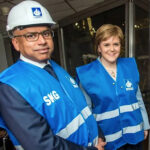
Consider Ms Sturgeon’s rabbit-out-of-the-hat pledge at the SNP conference on 10 October 2017: “We will establish a publicly-owned, not-for-profit energy company to deliver low-cost renewable energy”. A bill would be laid before Holyrood to this effect, implementing the pledge before the 2021 election.
Fast forward to January 2025, when, after years of inaction on this loudly championed policy, Acting Energy Secretary Gillian Martin, SNP, announced that the plan would have to be abandoned because Holyrood did not have the necessary powers to implement it under the devolution settlement – so at least she was able to blame the UK for that. We might ask why Ms Sturgeon, as First Minister, did not know in 2017 that the devolution settlement did not allow the setting up of a not-for-profit energy company, but the answer can only be that she did not trouble to find out.
Her reasoning was that, if the will were there, it would be done, and she was determined that the will would be there. Most importantly, it would have spoiled her thunder at her party conference in 2017 had she not been able to make her announcement of this new policy.
Now, in October 2025, at another SNP conference, in Aberdeen, John Swinney has done something similar. To loud acclaim, and the inevitable standing ovation, he announced that he would introduce a system of 15 ‘walk in GP clinics’, the first to be rolled out within a year, and the 15 to be only the start.
He rushed to promise new clinics that would be open to everyone, from 12 noon to 8pm, seven days a week, located conveniently close to schools and workplaces, with no need to book in advance. A staff of GPs, nurses and support staff would be on hand. The clinics would provide same-day assessments, diagnostics and treatment. This would be a service working alongside, not in place of, existing GP practices. Yet this is the kind of service that not even the private sector can provide.
How was the NHS to do it? Did Swinney consult the medical profession about it? Of course not.
Colin Poolman, Executive Director of the Royal College of Nursing, put it very mildly: “What sounds good from the platform of a party political conference will require in-depth planning to have any chance of success. We need to see a detailed workforce plan on how to recruit enough staff both to fill the current gaps and the extra capacity required to provide these new clinics”. One might ask why Swinney and Neil Gray didn’t start with trying ‘to fill the current gaps’ before promising a vast new cohort of staff. Mr Poolman also raised the question of an Audit Scotland report from earlier in 2025 which highlighted how the expansion of wider primary care teams to support general practice ‘had been slower than planned’. Now there’s a surprise.
The Scottish chair of the Royal College of General Practitioners, Dr Chris Provan, asked: “Where will these services be located, when many GP practice premises are not fit for purpose and are waiting for long overdue capital investment?”. He also asked how continuity of care would be maintained in the proposed new system, and who would staff the new clinics and their extended weekend hours. The answer is, as usual, that no-one knows because no-one in government has asked these questions let alone begun to arrive at answers.
There have been other instances of the SNP government’s absent or botched planning. Although she is a Green MSP, and not of the SNP, the bottle return scheme of Lorna Slater, the former SNP-Green coalition minister, is similar. Again, she did not consult the industry’s experts, and found her project ignominiously rejected by Alister Jack MP, Scotland Secretary, because she had not considered that it might fall foul of the Internal Market Act – and did not bother to ask whether it would.
Long before that, there was the daddy of them all: Alex Salmond’s “the rocks will melt with the sun” moment, which was made to work after a fashion, by trashing the FE colleges and robbing schools to pay for ‘free’ university tuition for a limited number of Scots. The reckoning would eventually come when paying universities £1,800 per ‘free’ Scottish student – whereas English students paying £9,000 per year and foreign students paying a lot more than that – meant that Scotland’s universities became full of more lucrative fee-payers. Then Covid put paid, literally, to at least some of that, as high-rolling foreign students stayed away and Scottish universities found themselves in what George H.W. Bush called ‘deep doo-doo’, struggling to save money by closing courses and introducing redundancy programmes.
One could dismiss these instances of making policy on the hoof as either wishful thinking or downright dishonesty. But I think there is more to it than that. It looks as if there is a genuine belief in the SNP and its leadership that anything is possible if they want it badly enough.
The SNP is, as I have said, a campaigning outfit or it is nothing. It is a faith-based cult with a belief that the burning desire of the SNP, its leadership and membership and its supporters, can, if it is channelled sufficiently single-mindedly, prove to be invincible.
Not only can it do it: it must do it, and it will do it. It is not only that – its members tell us, very confidently, that ‘independence is inevitable’. That is simply a very lazy usage, for, as the distinguished twentieth century historian A.J.P. Taylor used to say, “Nothing is inevitable until it happens”. And yet SNP devotees really do believe their cause is unstoppable.
They should heed the recent words of Professor Aileen McHarg who certainly used to be sympathetic to their cause. She has told a Holyrood committee that “Saying that if the SNP or some other pro-independence party won an overall majority then that’s the trigger and the only trigger [for a referendum], that’s not likely to happen, so it doesn’t seem sensible to me…. Independence campaigners are wasting their time looking for a legal route to independence. If they want Scotland to be independent, they need to persuade a significant majority of Scotland – that is the best constitutional route.”
Prof McHarg and other academics also ruled out of contention the desperate claims by the Salvo secessionist group relating to the alleged ‘voluntary’ nature of the Act of Union, because the Scotland Act 1998 takes precedence and renders the 1707 acts superfluous: “It doesn’t inform legal debate”, said Prof McHarg, “It is not a legal trump card to overcome the much clearer modern authority based on the Scotland Act and the sovereignty of the Westminster Parliament”.
Further, on the secessionist side there are doubters. Some who marched up the hill repeatedly because Ms Sturgeon told them, with what seemed like 24-carat conviction, that a new referendum would be held next year – always just out of reach but, it seemed, only just – have now lost faith. The Grand Old Duke of York at least marched his men to the top of the hill and then marched them down again. SNP leaders march their troops half-way up the hill and then leave them to straggle back down on their own. This has happened too often for some, who have left the party – perhaps now for Alba, which is going nowhere – or stopped voting for it (or anyone else).
The faith in independence remains strong among a substantial minority of Scots, but it has dwindled. Hatred of the UK in certain quarters remains unabated, but there is no credible champion to turn that into a battle-ready force. John Swinney can tell as many porkies as he likes about how dastardly the UK and all its cohorts are, and that all the faithful need to do is to campaign for secession with iron determination. The prize is there to be won, and those with the strongest will shall win it. But Holyrood has no locus in constitutional affairs, as Ms Sturgeon found out when she was rash enough to take that question to the Supreme Court.
It seems that ‘Triumph of the Will’ is a mirage, as it was for another party in another country in another century.
Established in 2006, ThinkScotland is not for profit (it makes a loss) and relies on donations to continue publishing our wide range of opinions – you can follow us on X here – like and comment on facebook here and support ThinkScotland by making a donation here.