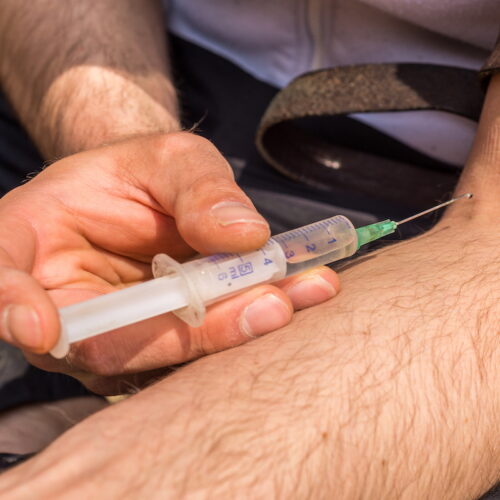

SCOTLAND’S DRUG DEATHS are rising again.
Public Health Scotland’s RADAR system shows 312 suspected deaths in spring 2025 up from 215 only six months earlier. Naloxone use has jumped 45 per cent. Emergency attendances for drug harm are up nearly 20 per cent. And nitazenes — synthetic opioids hundreds of times stronger than heroin – are now implicated in one in every 16 deaths.
This is not stabilisation. It is escalation.
Against this backdrop, Edinburgh’s Integration Joint Board is proposing a Safer Drug Consumption Facility in the Old Town: seven booths, open 8–12 hours daily, with nearly 45 full-time staff. Politicians are presenting it as a compassionate and progressive response.
It is neither.
Compassion or duplicity?
There is nothing compassionate about building booths where people can inject drugs while leaving them almost no chance of getting into detox or rehab. Glasgow has 18,000 people with drug problems and just 23 publicly funded rehab beds. Edinburgh and the rest of Scotland is scarcely better.
To call this “progress” is an insult to families who bury their children because treatment is unavailable. It is duplicitous to speak the language of compassion while funding containment and neglecting recovery.
The evidence is flimsy
Supporters on Edinburgh’s city council point to Vancouver’s Insite. Yet the evidence there is shaky, based heavily on self-reported surveys and observational data. Critics have long said it was “built on sand.” The most often cited claim of a 35 per cent fall in overdose deaths only applied within 500 metres of the site, not across the city.
And the hard numbers from Glasgow are damning. Since the UK’s first consumption room opened in January 2025, suspected drug deaths in the city have risen by 33 per cent in just three months.
If this is compassion, it is compassion without truth.
Managed decline dressed up as progress
Politicians love the optics. They can cut a ribbon, call it “progressive,” and look caring. But in reality, it is managed decline. It keeps people alive just long enough to manage the public nuisance. It contains misery, but it does not end it.
Real compassion is not helping someone stay in addiction more safely. Real compassion is helping them leave addiction behind.
Recovery is not a mystery. Detox, rehab, trauma support, recovery housing, and employment pathways work. We know what saves lives. The problem is political will, not lack of evidence.
Lessons ignored
In Oregon, Washington and British Columbia, governments tried the same trick, sell harm reduction as progress while neglecting treatment. Overdose deaths soared, public disorder worsened, and political support collapsed.
In contrast, Ontario is now showing another way. In April 2025 it launched Homelessness and Addiction Recovery Treatment (HART) Hubs, moving away from supervised injection sites. These hubs connect people directly to detox, mental health care, housing and case management. In the first quarter, suspected drug deaths in Ontario fell 11 per cent compared with the previous quarter — and 41 per cent compared with the same period in 2024. In Toronto, non-fatal overdose 911 calls halved.
That is what progress looks like: treatment first, not drug booths.
The moral line
This is not just a policy debate. It is a moral one. Scotland has chosen to fund safer ways to stay in addiction rather than real exits from it. That is not progressive. It is abandonment dressed up as compassion.
Every pound spent on a consumption room while detox beds are scarce is a political choice to contain people instead of freeing them. Every time a politician calls that “progress,” they betray the very people they claim to serve.
Containment is not compassion. Managed decline is not progress. Real compassion is recovery. Real progress is lives rebuilt, families restored, communities healed.
Scotland deserves leaders who will tell the truth and fund what works. Anything less is duplicity. And duplicity, in this crisis, costs lives.
Established in 2006, ThinkScotland is not for profit (it makes a loss) and relies on donations to continue publishing our wide range of opinions – you can follow us on X here – like and comment on facebook here and support ThinkScotland by making a donation here.
Photo by Animaflora PicsStock from Adobe Stock